Umeboshi — Salt, Time and the Japanese Art of Preserving Ume
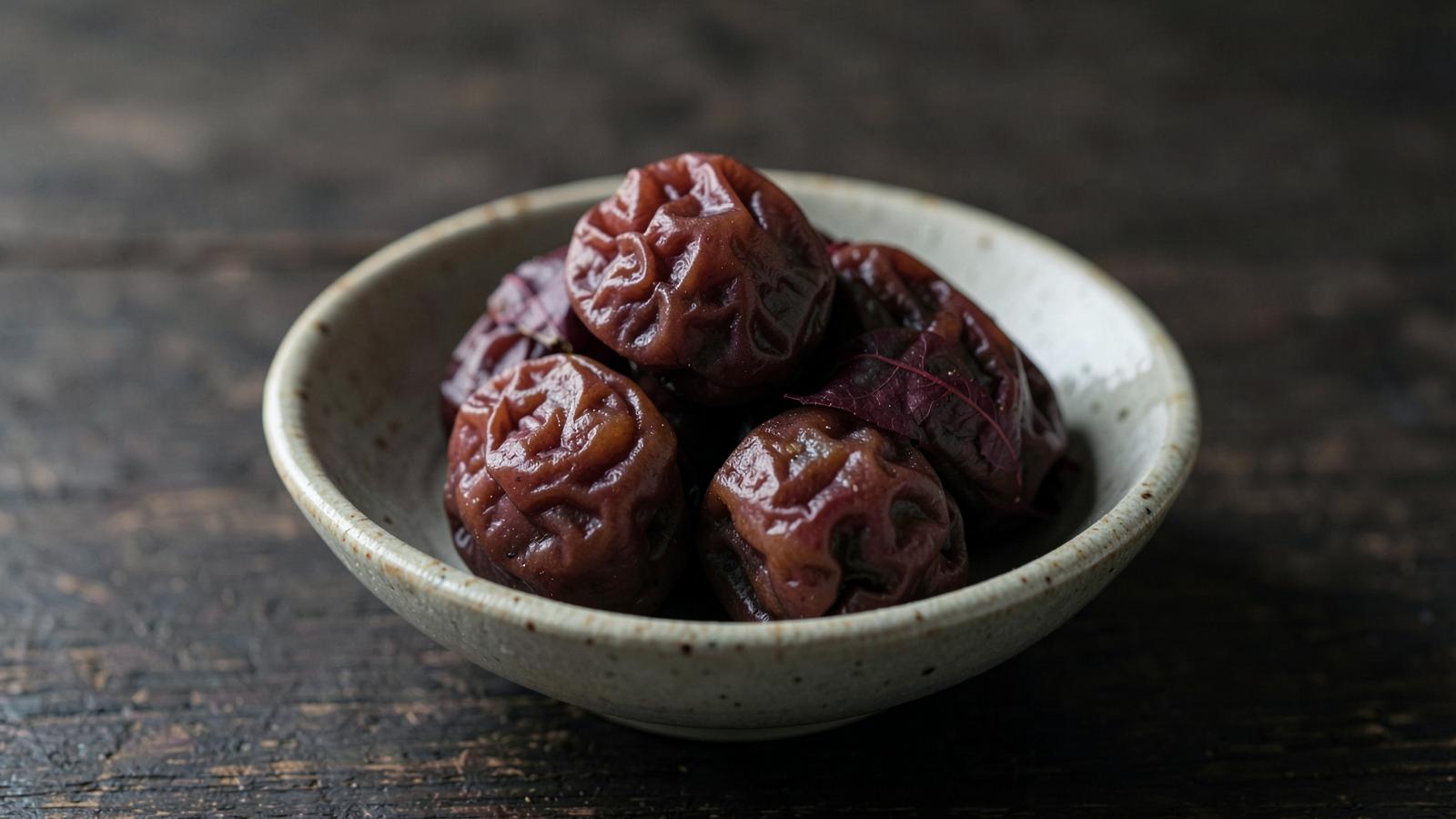
Umeboshi is not simply a salty plum. It is a preservation tradition built around Japanese ume, salt, time and often red shiso.
Umeboshi is one of those foods that compresses an entire preservation philosophy into something small enough to sit beside a bowl of rice. The fruit is ume, Prunus mume, often translated as Japanese apricot or plum. It is salted, weighted and traditionally dried, sometimes with red shiso leaves that tint the fruit and its brine. The result is intensely salty, tart and aromatic. A little can flavour an entire meal — which is fortunate, because traditional umeboshi can contain a great deal of sodium.
Not a fresh plum with salt sprinkled on top
Traditional preparation starts with ripe ume fruit and a substantial proportion of salt. Salt draws out liquid, creating umezu, the characteristic ume vinegar or brine. The fruit is held under weight so it remains submerged. Red shiso may be added for colour and aroma. In many methods, the fruit is later sun-dried and then rested again. The exact process varies by household and region, but time and salt are central technologies.
Preservation before refrigeration
High salt concentration suppresses many spoilage organisms and draws water from the fruit. Drying further changes water activity and texture. This is why umeboshi fits into the wider Japanese world of tsukemono: preserved foods that extend seasonal ingredients and bring strong flavour to plain staples. The original value was not a marketing claim about superfoods; it was reliable preservation and appetite-brightening flavour.
Why it tastes so powerful
Ume contains organic acids, including citric acid, which contribute to the intense sourness. Salt heightens contrast, while shiso adds aromatic phenolic compounds. The result is a condiment rather than a snack food for most people. A small piece can transform rice, noodles, dressings, steamed vegetables or onigiri. In a modern diet, that culinary role makes more sense than treating umeboshi as something to eat in large quantities for health.
What about the health claims?
Ume and ume products have been studied for antioxidant compounds, digestion-related effects and other biological activities. Some observational and small clinical studies are interesting, but they do not justify claims that umeboshi detoxifies the body, prevents disease or replaces treatment. The clearest nutritional fact about traditional umeboshi is also the simplest: it can be very high in sodium. People who need to restrict sodium should take that seriously.
Traditional food can still evolve
Commercial producers now offer reduced-salt umeboshi, honey-flavoured versions and products acidified or preserved with different techniques. These are not identical to high-salt traditional methods, so their storage requirements can differ. When making umeboshi at home, use a tested recipe and pay attention to the salt percentage, fruit condition, clean equipment and signs of mould.
The lesson of concentrated flavour
Umeboshi is a beautiful reminder that preservation often creates a new ingredient rather than merely freezing the old one in time. Fresh ume is transformed into something sharper, saltier and more durable. Used in a small amount, it can bring enough acidity and depth to reduce the need for other heavy seasonings. Old preservation wisdom was often about making a little ingredient work very hard.
Key takeaways
- Umeboshi is salted, weighted, sun-dried and often coloured with red shiso — not a fresh plum.
- The intense sourness and saltiness are preservation doing its work.
- Traditional versions are very high in sodium; reduced-salt versions need proper storage.
Further reading
Enjoyed this?
Get the next one straight to your inbox.
Keep reading
Related articles
Explore more natural food, fermentation and wellness ideas from Ika’s Realm.
Fermentation Is Controlled Ecology — What Really Happens in a Jar
A ferment is a tiny ecosystem shaped by salt, temperature, oxygen, acidity and time. Learn how microbes compete, cooperate and transform food.
The Science of Natural Umami — Why Kombu & Shiitake Are So Powerful Together
Glutamate, guanylate and the synergy effect: why two quiet ingredients together taste far more savoury than either one alone.
Honey-Preserved Fruit — Rediscovering an Ancient Kitchen Idea
Fruit macerated in honey is one of the oldest ideas in the kitchen. Here's what honey really does, what it doesn't, and how to do it safely today.