Fermentation Is Controlled Ecology — What Really Happens in a Jar
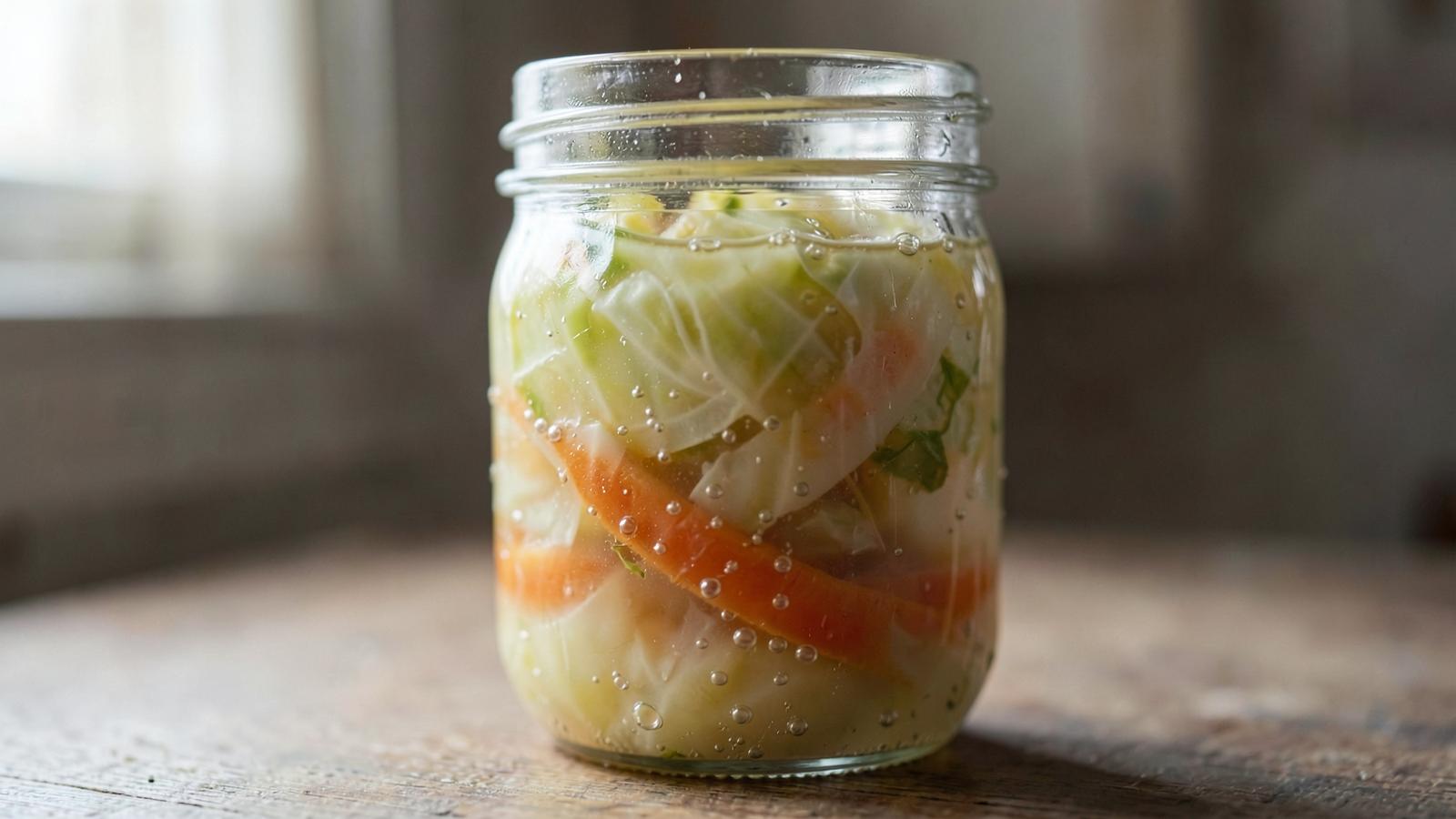
A ferment is a tiny ecosystem shaped by salt, temperature, oxygen, acidity and time. Learn how microbes compete, cooperate and transform food.
A jar of sauerkraut looks still, but it is an ecological drama. Different microbes arrive on the raw cabbage. Salt changes which species can compete. Oxygen is gradually excluded. Acids accumulate. The community shifts as the environment changes, and the food becomes sour, softer and more stable. Fermentation is therefore more than a recipe. It is controlled ecology — a sequence of living populations shaped by conditions we deliberately set.
The ingredients include microbes
Vegetables carry microorganisms from the field, handling and kitchen environment. When cabbage is shredded, salted and packed, the brine selects for salt-tolerant organisms, including lactic-acid bacteria. These bacteria metabolise sugars and produce lactic acid. As acidity rises, many competitors become less able to grow. A successful ferment is not sterile; it becomes stable because the environment increasingly favours the organisms and chemistry we want.
Salt is an ecological tool
Salt draws water from vegetables to create brine, changes texture and selects microbial communities. Too little salt can make a vegetable ferment less predictable; too much can slow desired fermentation and make the result unpleasantly salty. That is why good recipes use measured percentages rather than 'a handful'. Fermentation is forgiving in some ways, but precision improves repeatability.
Oxygen decides who gets invited
Most classic lactic vegetable ferments work best when the food stays submerged. Pieces exposed above the brine are more available to yeasts and moulds that thrive with oxygen. Fermentation weights, narrow-neck jars and correctly filled vessels all solve the same ecological problem: keep the vegetable in the environment designed for lactic fermentation.
Temperature changes the pace
Warmth speeds microbial metabolism, but faster is not always better. Higher temperatures can produce softer textures and different flavour profiles, while cooler fermentation moves more slowly. The ideal range depends on the food and recipe. This is why two jars made with identical cabbage can taste different when one sits beside a warm cooker and the other in a cool pantry.
Fermentation transforms chemistry
Microbes do more than preserve. Their enzymes break down carbohydrates and can transform plant phenolics, vitamins, aroma compounds and anti-nutritional factors. Recent reviews are exploring how lactic fermentation can increase the bioaccessibility of some plant compounds. Results depend on the food, strain and process, so it is inaccurate to say fermentation automatically 'creates probiotics' or improves every nutrient.
The difference between normal and unsafe
Bubbles, sour aroma and cloudy brine can be normal. Fuzzy mould, rotten odours, slimy spoilage outside what a tested recipe predicts, leaking seals or obvious contamination are reasons to discard rather than rescue a batch. Fermentation experience includes learning when not to be sentimental about a jar. Food safety is part of the craft.
A living technology in the kitchen
The most exciting part of fermentation is that the cook is not doing all the work. We build the conditions and a microbial community completes the transformation. That is why fermenting teaches such a useful systems lesson: outcomes emerge from relationships between organisms, temperature, salt, oxygen, acidity and time. Nature did not just provide the ingredients. It provided the process.
Key takeaways
- Salt, oxygen and temperature decide which microbes thrive — that is the whole craft.
- Fermentation changes chemistry: acids, aromas and textures are all new.
- Normal ferments smell sour and lively; discard anything mouldy or putrid.
Further reading
Enjoyed this?
Get the next one straight to your inbox.
Keep reading
Related articles
Explore more natural food, fermentation and wellness ideas from Ika’s Realm.
Beginner's Sauerkraut: Two Ingredients, Endless Payoff
Cabbage, salt and patience. Everything you need to make your first successful ferment — and how to know it's going right.
Herbal Lactic Fermentation and “Bolotov Kvass” — Tradition, Microbes and Safety
Herbal ferments often called “Bolotov kvass” mix plant material with lactic fermentation. The microbiology is fascinating, but recipes vary and safety matters.
Natto, Tempeh and Lacto-Fermented Soybeans: Three Fermentations Explained
The same bean, three microorganisms, three completely different foods. A clear guide to how natto, tempeh and brined soybeans diverge.