Old Wisdom, Modern Kitchen — Why Slow Food Techniques Still Matter
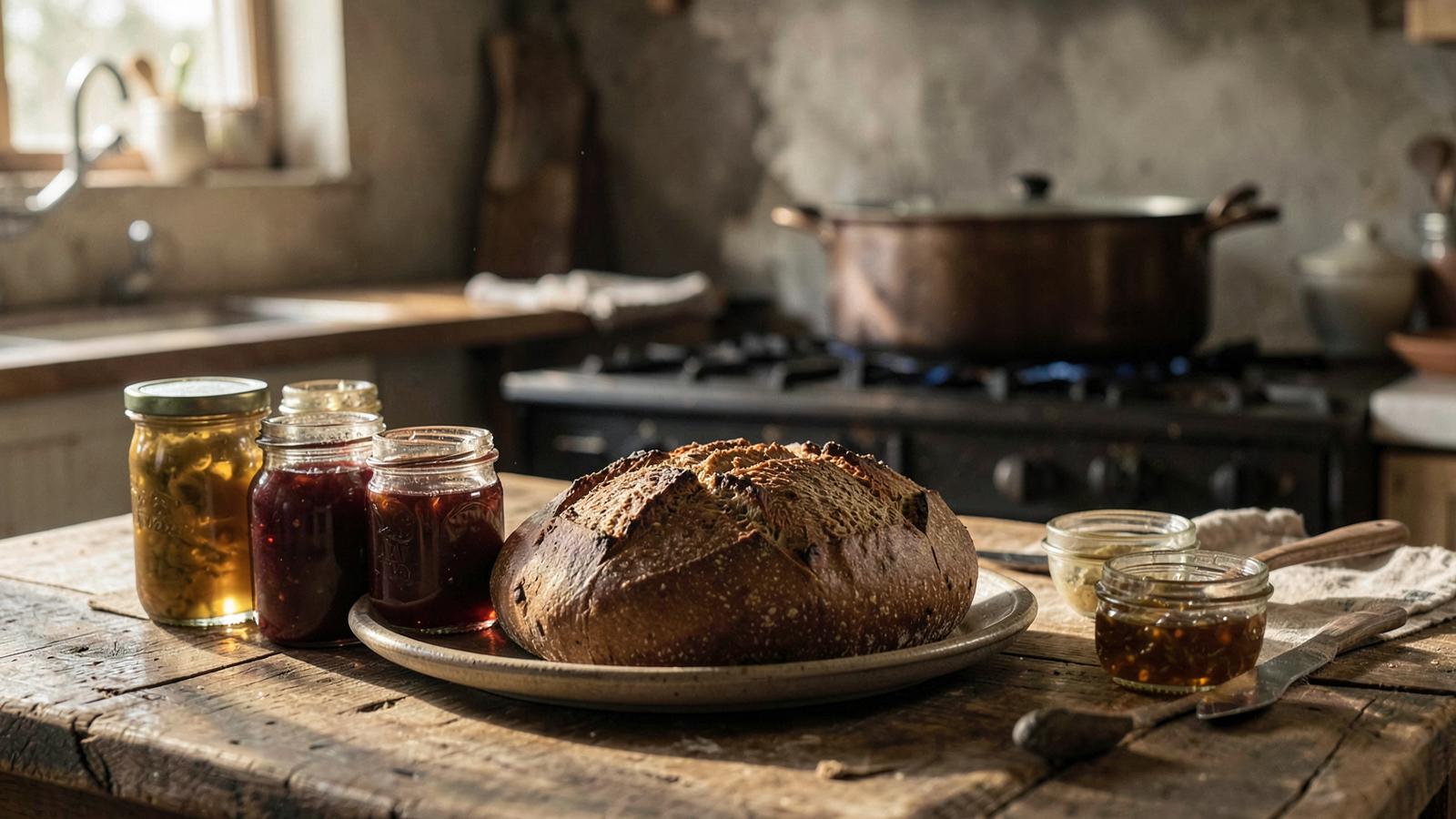
Drying, fermenting, slow cooking, maturing dough and preserving fruit were once survival skills. Today they can still save food, build flavour and reconnect us with time.
Many old kitchen techniques were invented because people had constraints we no longer share. There was no freezer full of identical produce in January. Harvests arrived in waves. Fuel mattered. Milk soured. Bread went stale. Fruit softened faster than a family could eat it. The response was not to waste less through good intentions; it was to develop processes that turned time into an ingredient. Fermentation, drying, maturing, pickling, slow cooking and transforming leftovers were technologies of everyday survival. Their value did not disappear when refrigeration arrived.
Time creates flavour we cannot fake instantly
A matured gingerbread dough changes as flour hydrates, spices diffuse and sugars and fats redistribute. A slow fruit butter becomes darker and more concentrated as water evaporates and flavours deepen. Fermented cabbage develops acidity through microbial metabolism rather than the addition of vinegar. These processes are not always nutritionally superior, but they create sensory complexity that speed cannot fully imitate.
Preservation is a form of design
Drying, salting, acidifying and fermenting all manipulate the conditions microbes need. A pantry jar is therefore a designed environment. So is a loaf of sourdough or a pot of jam. Understanding this makes old recipes feel less mysterious. They are forms of applied food science developed long before the chemistry was named.
Waste becomes an ingredient
Stale bread can thicken soup, become crumbs, turn into bread pudding or form the base of dumplings. Soft apples can become butter. Whey can enrich dough or soup. Citrus peel can flavour sugar or vinegar. The old kitchen asked a different question from the modern bin: not 'Is this perfect?' but 'What stage is it at, and what can it become next?' That mindset can reduce waste without requiring complicated zero-waste rules.
Tradition deserves updating when safety knowledge improves
Not every ancestral practice was safe, and not every grandmother’s method should be copied unchanged. Modern canning temperatures, refrigeration, allergen awareness and food microbiology exist because people learned more. The respectful approach is not to freeze tradition in time. It is to keep the useful principle — preservation, thrift, flavour, seasonality — while applying safer methods where evidence has improved.
A slower kitchen can still be efficient
Slow food does not mean standing at the stove all day. Many processes are slow because they are unattended: dough rests, yoghurt cultures, apples simmer gently, beans soak, vegetables ferment. The active work may be only minutes. Batch cooking and pantry building can actually reduce weekday effort because yesterday’s time becomes tomorrow’s convenience.
Food as memory and systems thinking
Recipes carry more than nutrition. They record climate, fuel, harvest patterns, trade, religious customs and family preferences. A dark bread tells a grain story. Pickled vegetables tell a winter story. A jar of apple butter tells a harvest story. When we remake these foods thoughtfully, we do more than reproduce taste — we reconnect technique with the conditions that created it.
Keep the wisdom, lose the nostalgia
The old kitchen was not automatically healthier, easier or more romantic. It often involved hard labour and limited choice. What is worth keeping is the intelligence: use what is abundant, transform what will not last, build flavour with time, and waste less. That wisdom fits comfortably beside a freezer, a blender, a pH meter and a modern oven. Tradition and technology do not have to be enemies.
Key takeaways
- Time creates flavour that speed cannot imitate.
- Preservation and whole-ingredient cooking are design decisions, not nostalgia.
- Keep the technique, update the food safety.
Enjoyed this?
Get the next one straight to your inbox.
Keep reading
Related articles
Explore more natural food, fermentation and wellness ideas from Ika’s Realm.
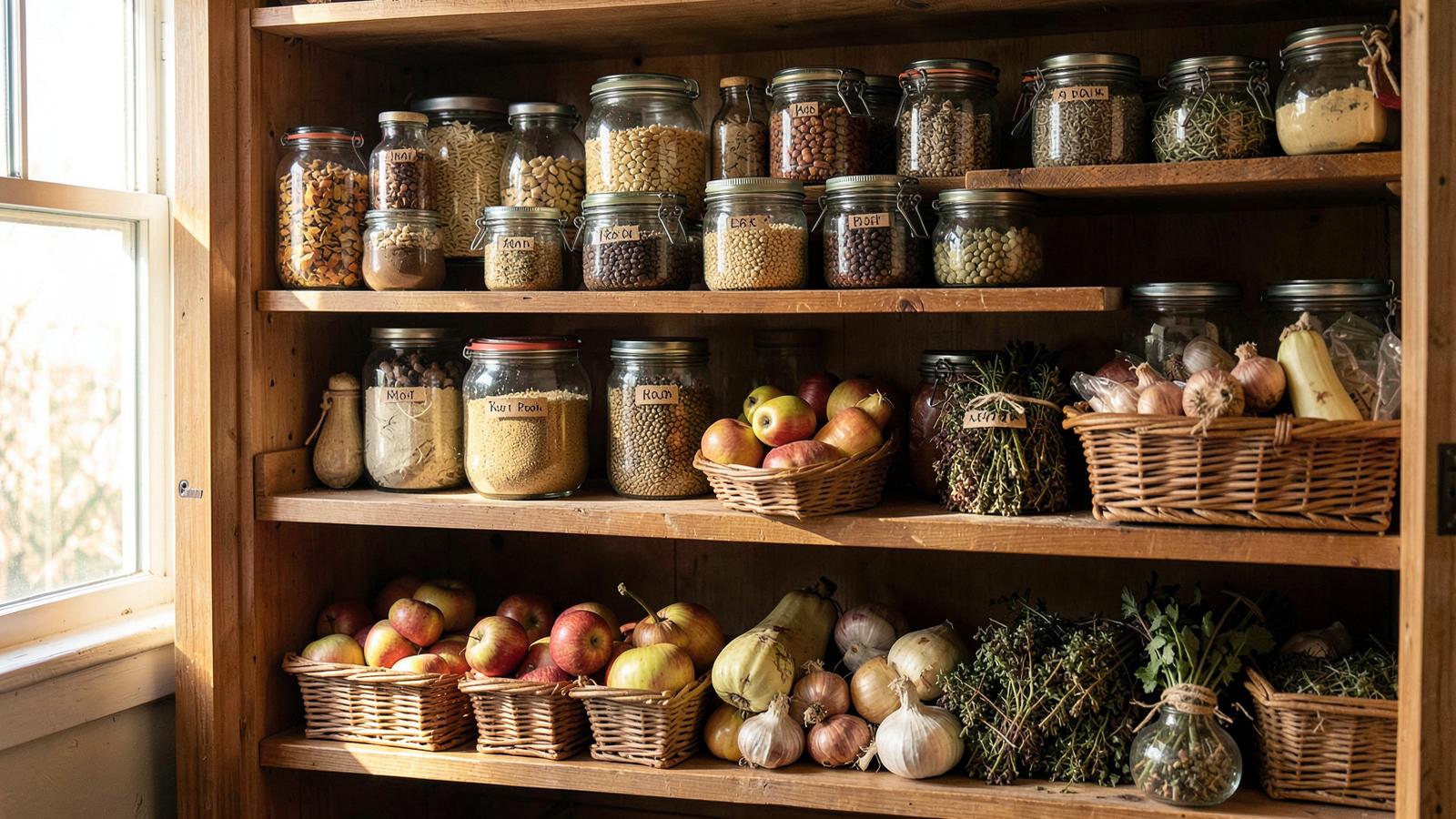
Stocking an Autumn Pantry the Old Way — A Practical Guide to a Season of Plenty
Build an autumn pantry with roots, apples, grains, dried herbs, ferments, preserves and practical rotation — inspired by old seasonal habits, adapted to a modern home.
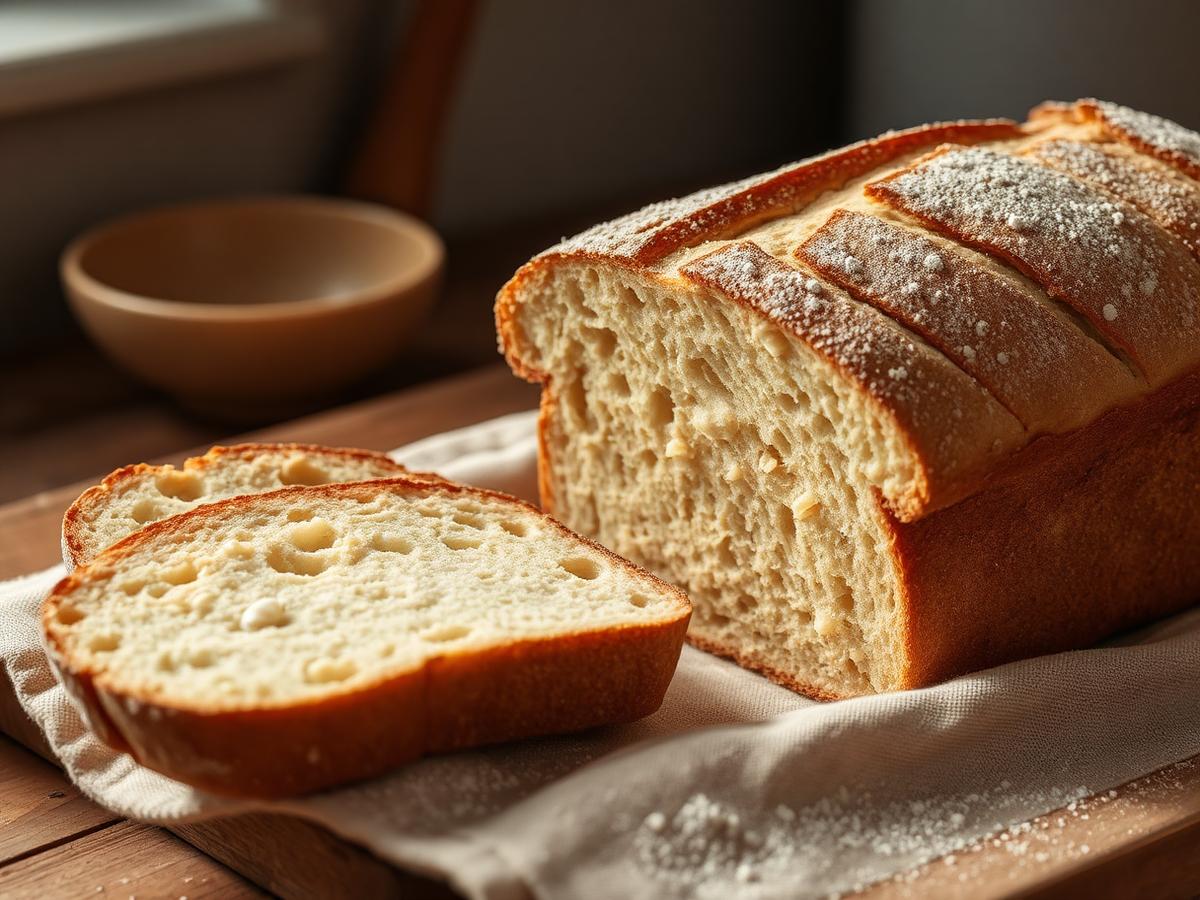
Potato Sourdough: The Secret to a Softer, Moist Loaf
Cooked potato holds water beautifully, and a sourdough loaf that includes it stays tender for days. A traditional trick, with a working ratio to start from.
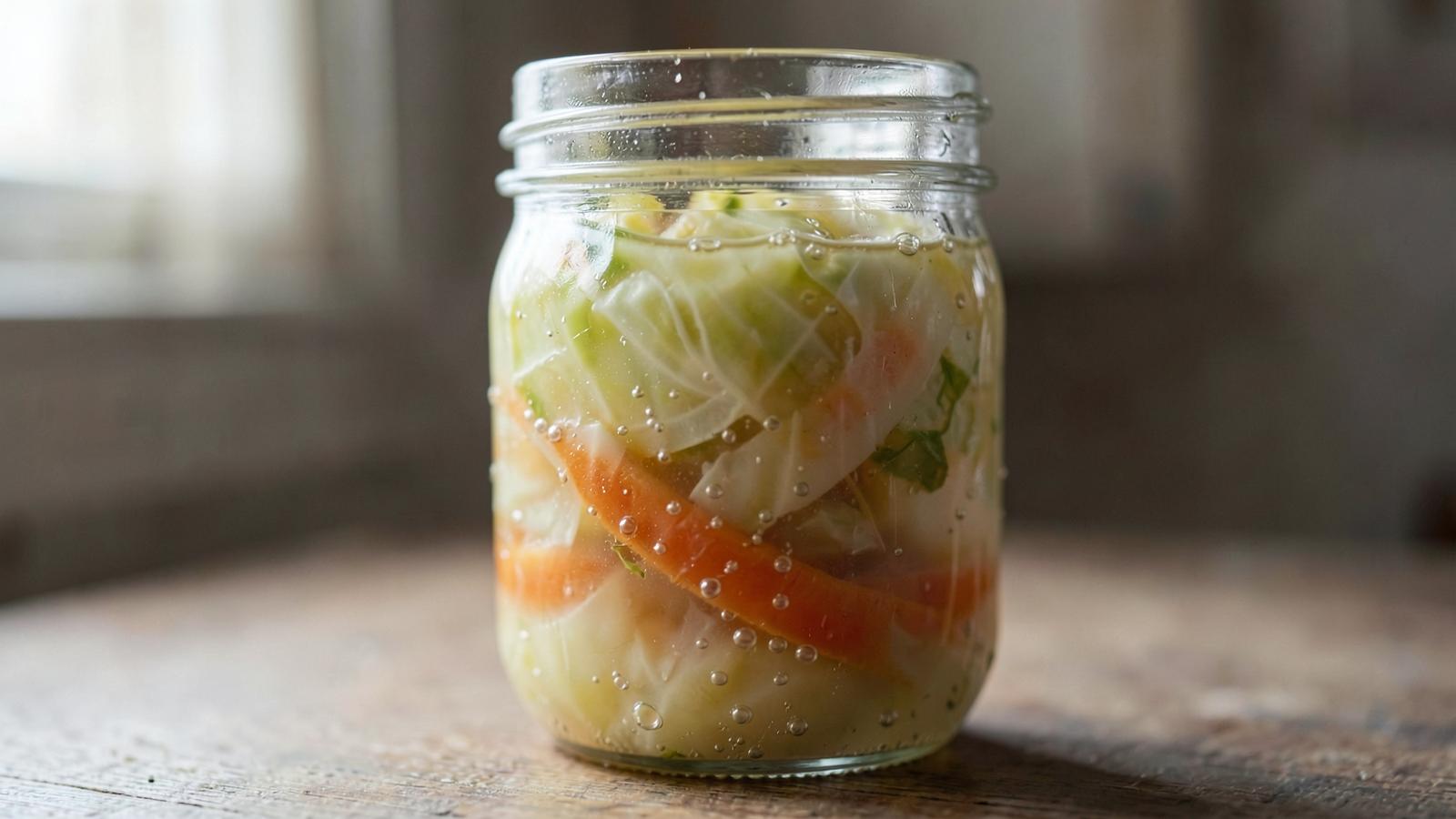
Fermentation Is Controlled Ecology — What Really Happens in a Jar
A ferment is a tiny ecosystem shaped by salt, temperature, oxygen, acidity and time. Learn how microbes compete, cooperate and transform food.