Melszpejs-Inspired Bread Pudding with Apples, Prunes and Walnuts
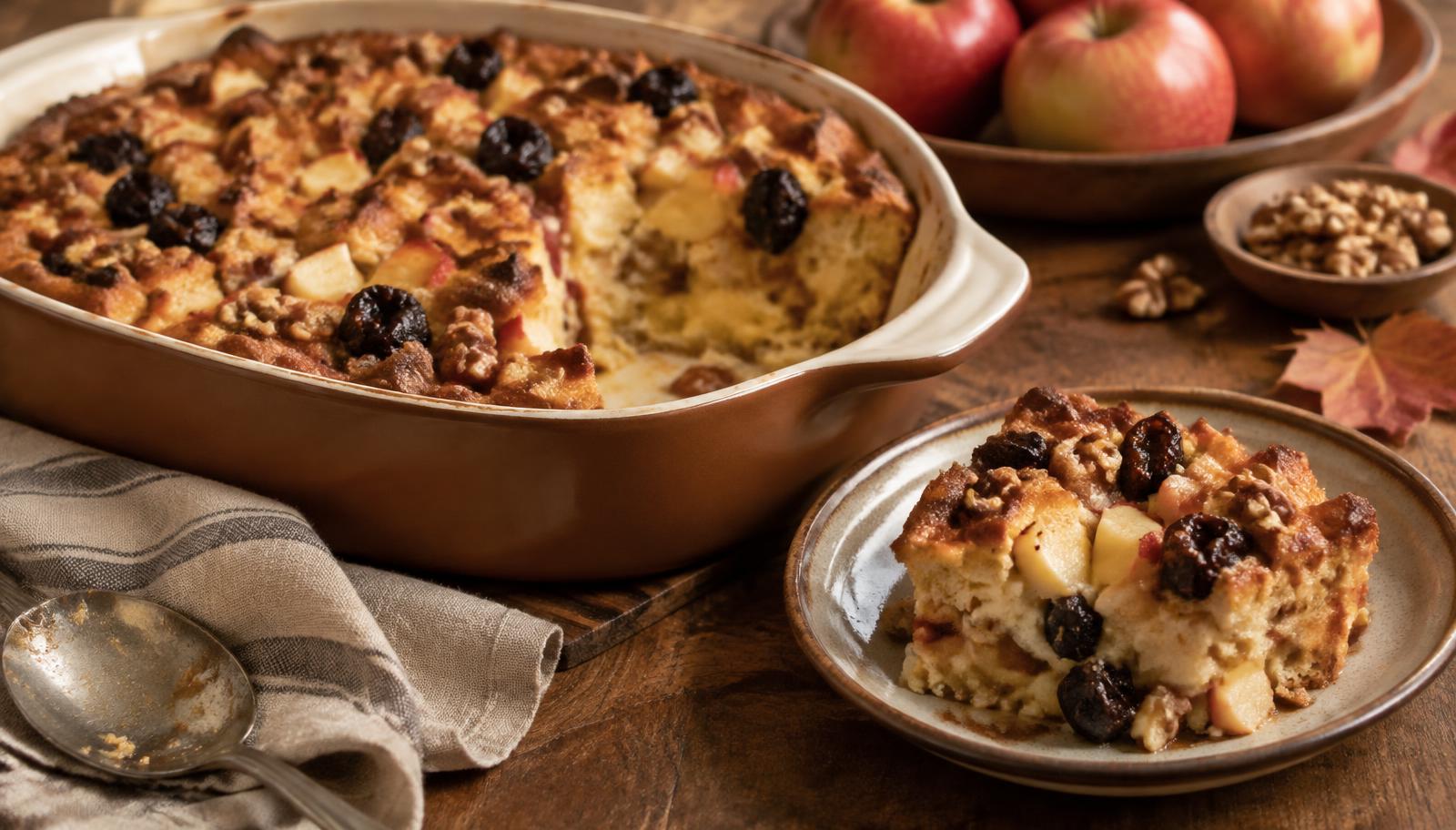
Discover a cosy bread pudding idea with apples, prunes, raisins and walnuts, inspired by Monika’s melszpejs recipe concept.
Some desserts begin with ingredients that already need a purpose. A heel of bread, a few apples and a handful of dried fruit can become a warm pudding with a soft middle and a lightly browned top. It is the kind of baking that makes an autumn kitchen smell welcoming without requiring a special shopping trip.
This version follows Monika’s idea for a bread-based melszpejs with dried fruit, nuts, egg yolks and whipped whites. It is presented as a home adaptation, not a verified historical recipe.
Choose the bread before adding the milk
Use wholesome, slightly stale bread. Plain wheat bread gives a milder result; a strongly flavoured sourdough will be more noticeable. Very salty, seeded or savoury bread changes the dessert, so choose deliberately.
Moisture matters more than a precise age. Dry breadcrumbs absorb differently from soft grated bread. Add liquid gradually and look for a moist mixture without a pool at the bottom. Do not use mouldy bread or try to remove mould by trimming away a visible patch. Bread is porous and contamination may extend beyond what you can see. [1]
Suggested ingredients
For a greased baking dish about 20 cm square, making approximately 6 portions:
• 200 g plain stale bread, finely grated or processed into coarse crumbs;
• 250–300 ml milk, added gradually;
• 2 medium apples, about 250 g prepared weight, peeled if preferred and coarsely grated;
• 60 g raisins;
• 60 g soft pitted prunes, chopped;
• 40 g walnuts, chopped;
• 20 g flaked almonds;
• 3 large eggs, separated;
• 50 g softened butter, plus a little for the dish;
• 50–70 g sugar, according to taste;
• 1 teaspoon cinnamon;
• 1 teaspoon vanilla extract;
• a small pinch of salt.
Allergens include wheat/gluten, milk, eggs and nuts. Check the individual ingredient labels. This is a sweet dessert; the fruit and nuts do not make it a low-sugar or high-protein product.
Suggested method
1. Heat the oven to 180°C conventional / 160°C fan. Grease the dish. Put the bread in a bowl and add 250 ml milk. Leave for about 10 minutes, then check the texture. Add only as much of the remaining milk as needed to moisten dry patches.
2. If the dried fruit is firm, soften it separately in a little hot water, then drain well. Excess soaking liquid will make the pudding wetter.
3. Beat the softened butter and sugar together. Beat in the yolks, vanilla, cinnamon and salt. Stir into the soaked bread, then mix in the apples, dried fruit and walnuts.
4. In a clean bowl, whisk the egg whites to soft peaks. Fold a spoonful into the bread mixture to loosen it, then gently fold in the rest.
5. Transfer to the dish, level gently and scatter the almonds over the surface. Bake for roughly 35–45 minutes, checking that the centre is fully set and cooked through. Baking time depends on the depth of the mixture and moisture in the bread and apples. If the top colours too quickly, cover loosely with foil.
6. Let it settle briefly before serving warm. Follow the storage guidance below for leftovers.
What to look for in the first test
The result should be spoonable and moist, with no runny egg mixture in the centre. A very wet pudding may need less milk or a shallower dish on the next attempt. A dry one may need more liquid, less baking time or bread with a different texture.
Write down the bread you used and how much milk it needed. That is the detail most likely to make the next batch more predictable. Do not change the dish size, fruit quantity and milk amount all at once if you want to understand the result.
Serving and keeping
Serve a small warm portion alone or with plain yoghurt, cream or custard. The prunes and apples already bring plenty of flavour, so a heavy topping is optional.
Cool leftovers promptly, refrigerate within one to two hours, and use within 48 hours or freeze. Keep the fridge at 5°C or below and reheat only once, until steaming hot throughout. [2]
The appeal of a bread pudding is its ability to make ordinary ingredients feel cared for. A little observation is part of that tradition: using what you have while learning how it behaves in the bowl and the oven.
Enjoyed this?
Get the next one straight to your inbox.
Keep reading
Related articles
Explore more natural food, fermentation and wellness ideas from Ika’s Realm.
White Peony Root vs Red Peony Root — One Plant, Two Herbal Traditions
Bai Shao and Chi Shao are not simply “white flower versus red flower.” Their identity depends on botanical source, processing and traditional use.
Umeboshi — Salt, Time and the Japanese Art of Preserving Ume
Umeboshi is not simply a salty plum. It is a preservation tradition built around Japanese ume, salt, time and often red shiso.
Old Wisdom, Modern Kitchen — Why Slow Food Techniques Still Matter
Drying, fermenting, slow cooking, maturing dough and preserving fruit were once survival skills. Today they can still save food, build flavour and reconnect us with time.