Kombucha vs Apple Cider Vinegar: Two Ferments, Two Very Different Foods
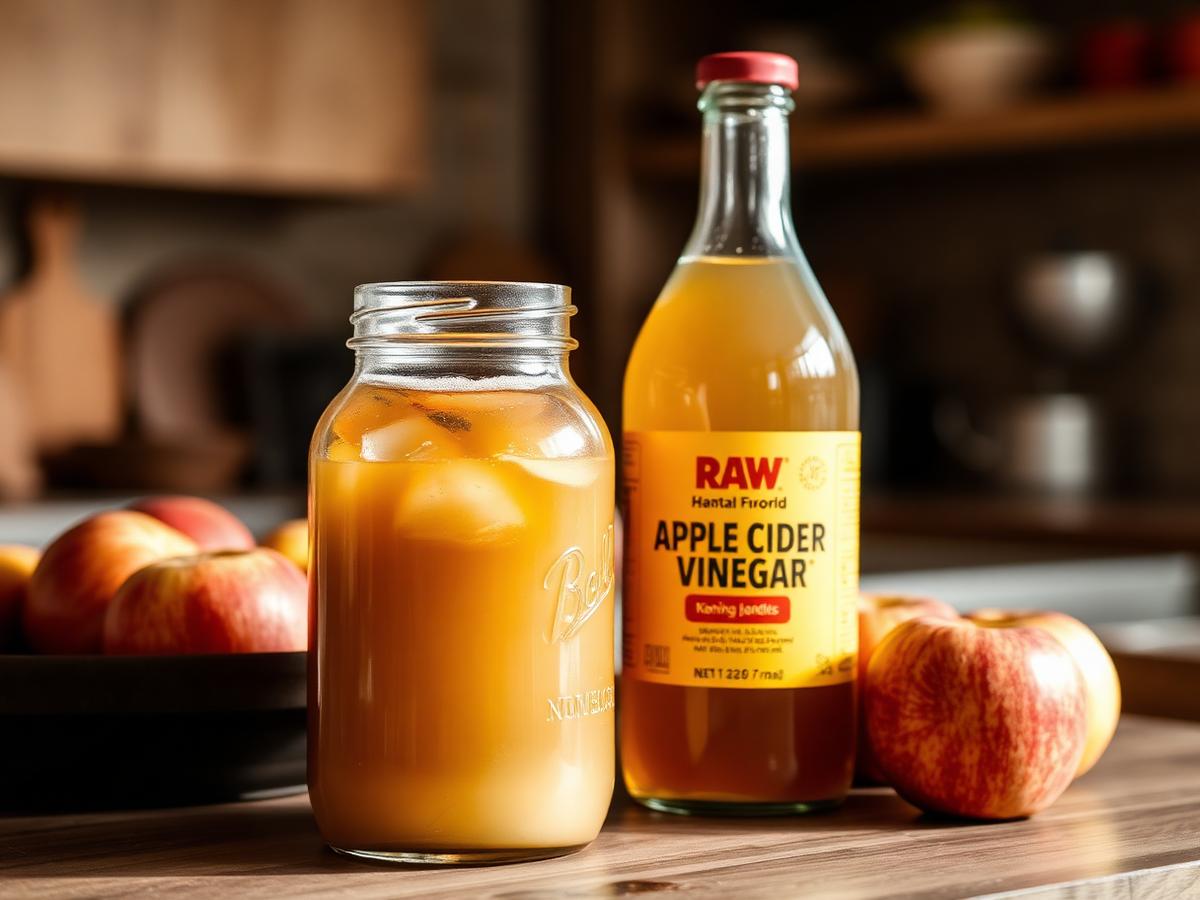
They appear in the same wellness conversations, but kombucha and apple cider vinegar are made differently, taste differently and are not interchangeable.
Kombucha and apple cider vinegar turn up in the same conversations so often that many people assume they are variations on one idea.
They are not. They start from different raw materials, rely on different microorganisms and finish at very different points on the acidity scale. Understanding the difference makes both of them more useful in the kitchen.
How kombucha is made
Kombucha begins with sweetened tea. A mixed culture of bacteria and yeasts, usually called a SCOBY, is added and left to work at room temperature for one to three weeks.
The yeasts convert some of the sugar into alcohol and carbon dioxide; the bacteria convert much of that alcohol into organic acids, principally acetic and gluconic acid. A little residual sugar and a trace of alcohol normally remain.
The result is lightly acidic, gently sparkling and moderate enough to drink by the glass. A second fermentation in sealed bottles, often with fruit, builds the fizz.
How apple cider vinegar is made
Apple cider vinegar starts with apples or apple juice and runs through two distinct stages. First, yeasts ferment the fruit sugars into alcohol, producing cider.
Then acetic-acid bacteria take over and convert nearly all of that alcohol into acetic acid. This second stage is what makes it vinegar, and it is far more complete than anything that happens in a kombucha jar.
The finished product typically sits around 5% acetic acid — sharp, concentrated and designed for the spoonful rather than the glass. Unfiltered bottles carry the cloudy 'mother', a mass of cellulose and bacteria.
Why they are not interchangeable
Acidity is the headline difference. Kombucha is mild enough to enjoy chilled and undiluted; vinegar at full strength is unpleasant to drink and hard on tooth enamel and the throat.
Flavour follows from that. Kombucha keeps tea tannins, fruit notes and a yeasty complexity. Vinegar is direct and acetic, which is why it excels in dressings, marinades, pickles, braises and sauces.
Swapping one for the other in a recipe rarely works. A tablespoon of vinegar in a dressing is not replaceable by a tablespoon of kombucha, and a glass of vinegar is not a substitute for a glass of kombucha.
What about live cultures?
Raw, unpasteurised versions of both may contain live microorganisms, but the numbers vary enormously between producers, batches and storage conditions, and pasteurised bottles contain none at all.
Neither product is a defined probiotic in the technical sense, which requires identified strains at documented doses shown to have a specific effect. Marketing language often blurs this.
The mother in vinegar is not a nutrient in any meaningful quantity either. It is a visible sign of minimal filtration, which is interesting, but it is not a health claim.
What research suggests
Vinegar has been studied more extensively than kombucha, mostly in small human trials looking at post-meal glucose response and satiety. Some results are promising; the effect sizes are modest and the studies are generally short.
Kombucha research is largely laboratory-based, examining organic acids and polyphenols from the tea. Robust human trials remain scarce, so confident claims about immunity, energy or detoxification are not supportable.
The honest summary is that both are interesting fermented foods with plausible minor effects, and neither is a treatment for anything.
Safety notes
Dilute vinegar before drinking it — a tablespoon in a large glass of water is typical — and rinse your mouth with plain water afterwards rather than brushing immediately.
Anyone with reflux, gastritis, or taking medication where acidity or potassium matters should be cautious with regular vinegar drinking and check with a clinician first.
Home-brewed kombucha needs clean equipment, food-grade vessels and attention to acidity; discard any batch with mould or an off smell. Because it contains trace alcohol, caffeine and acid, it is not suitable for infants and is best limited during pregnancy.
Key takeaway
One jar of sweet tea and one jar of apple juice, handled by different microbes, become two foods with almost nothing in common. Enjoy kombucha as a drink and vinegar as a seasoning, and let each do the job it is good at.
Key takeaways
- Kombucha ferments sweet tea; vinegar ferments apple sugars through alcohol into acetic acid.
- Vinegar is far more acidic and should be diluted.
- Live-culture content varies by product and is often overstated.
- Neither is a treatment; both are foods with history.
Enjoyed this?
Get the next one straight to your inbox.
Keep reading
Related articles
Explore more natural food, fermentation and wellness ideas from Ika’s Realm.
Beginner's Sauerkraut: Two Ingredients, Endless Payoff
Cabbage, salt and patience. Everything you need to make your first successful ferment — and how to know it's going right.
Oat Kvass — A Forgotten Fermented Drink Worth Rediscovering
Gently sour, faintly sweet and lightly fizzy: how to make a kvass-style oat ferment at home, and how to tell a good one from a bad one.
Fire Cider vs Elderberry Syrup: Two Winter Traditions Compared
One is a spicy vinegar infusion, the other a cooked fruit syrup. Two very different winter preparations, and why the difference matters.