
Cabbage, salt and patience. Everything you need to make your first successful ferment — and how to know it's going right.
Lacto-fermentation is one of the oldest food preservation methods we have, and sauerkraut is the friendliest entry point. Salt creates a selective environment where lactic acid bacteria already living on the cabbage thrive while spoilage organisms don't.
The single rule that determines success: keep everything under the brine. Vegetables exposed to air are where surface yeast and mould appear. A weight, a folded leaf, or a small brine-filled bag all work.
Expect cloudy brine and lively bubbling around day three — both are signs of a healthy ferment. A clean sour smell is good; anything genuinely putrid means start again.
Recipe card
How to Make It
Ingredients
- 1 medium white cabbage (about 1 kg)
- 18 g fine sea salt (2% of cabbage weight)
- 1 tsp caraway seeds (optional)
Method
- 1Remove and reserve two outer leaves. Shred the rest finely.
- 2Weigh the shredded cabbage and add 2% of that weight in salt.
- 3Massage for 8-10 minutes until a good pool of brine forms.
- 4Pack tightly into a clean jar, pressing until brine covers the cabbage.
- 5Fold the reserved leaves on top as a cap and weigh down.
- 6Ferment at 18-20°C, burping daily, and taste from day 7.
Key takeaways
- 2% salt by weight is the reliable ratio.
- Under the brine, out of trouble.
- Refrigerate once the sourness is where you like it.
Enjoyed this?
Get the next one straight to your inbox.
Keep reading
Related articles
Explore more natural food, fermentation and wellness ideas from Ika’s Realm.
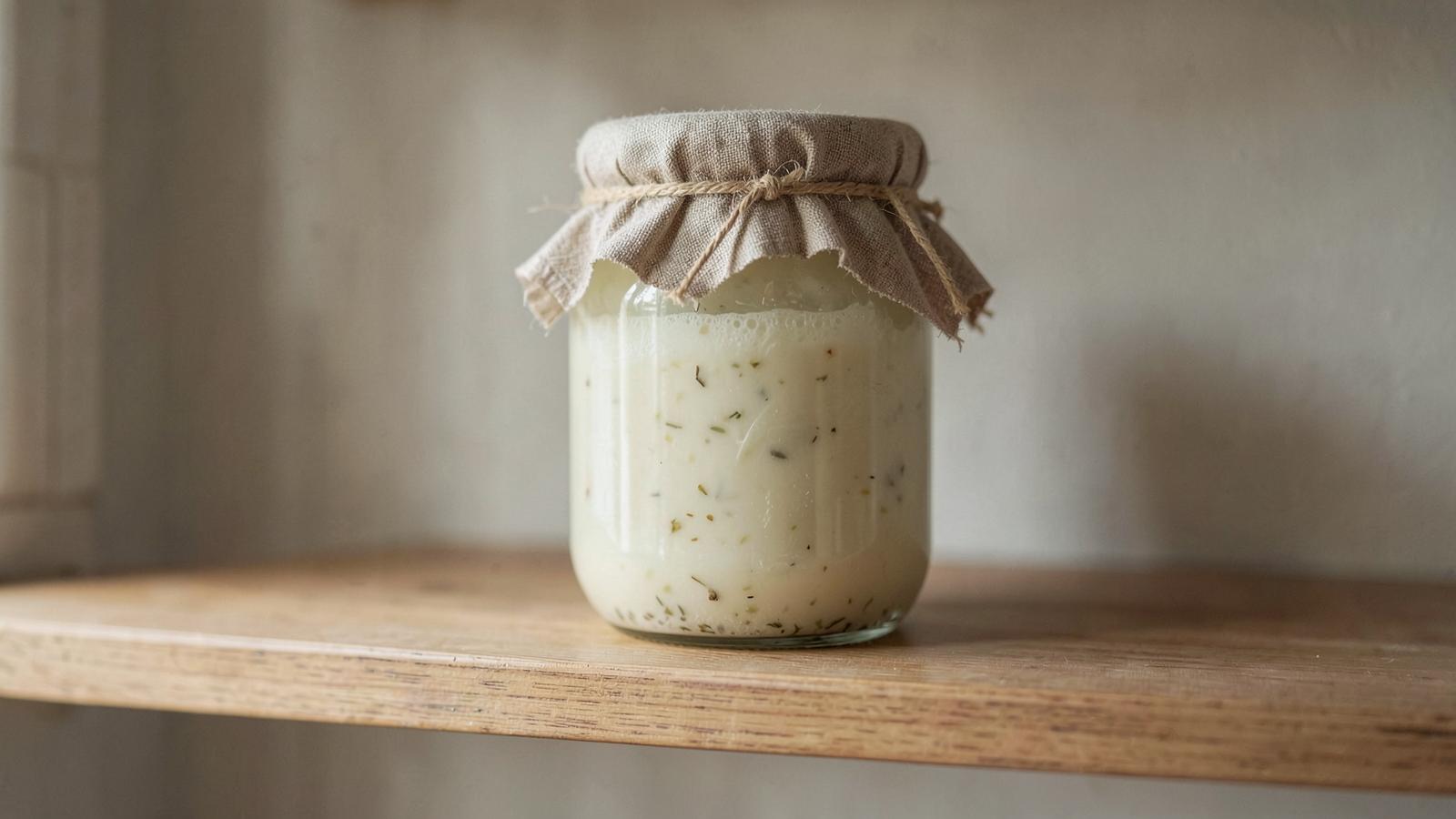
Herbal Lactic Fermentation and “Bolotov Kvass” — Tradition, Microbes and Safety
Herbal ferments often called “Bolotov kvass” mix plant material with lactic fermentation. The microbiology is fascinating, but recipes vary and safety matters.

Fermentation Is Controlled Ecology — What Really Happens in a Jar
A ferment is a tiny ecosystem shaped by salt, temperature, oxygen, acidity and time. Learn how microbes compete, cooperate and transform food.

Natto, Tempeh and Lacto-Fermented Soybeans: Three Fermentations Explained
The same bean, three microorganisms, three completely different foods. A clear guide to how natto, tempeh and brined soybeans diverge.