Bioelectric Medicine — When Nerves Become a Therapeutic Interface
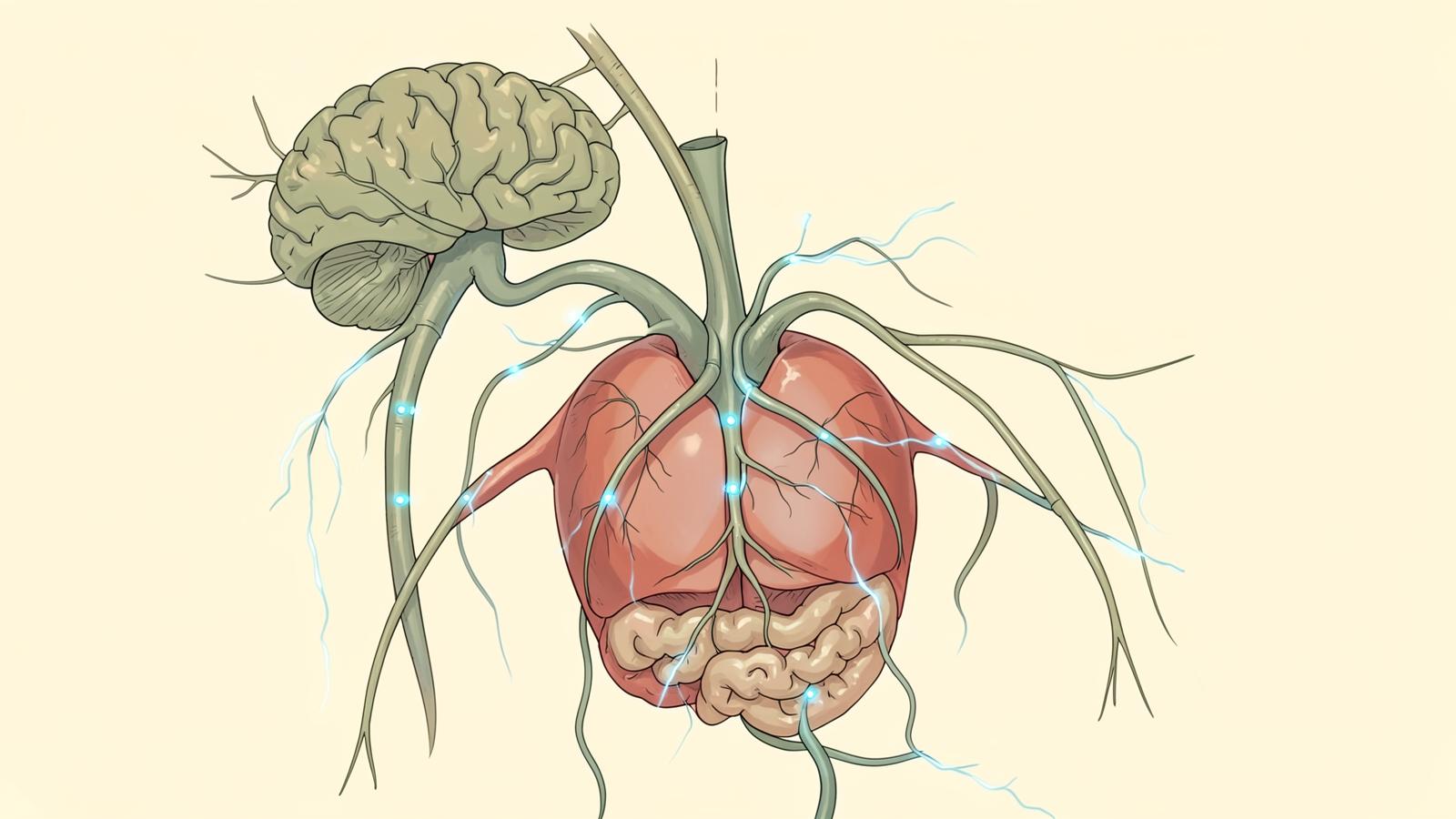
Bioelectronic medicine treats nerves as communication pathways that can sometimes be modulated electrically. Vagus nerve stimulation is one window into a fast-growing field.
The nervous system is already an electrical communication network. Every heartbeat adjustment, gut reflex and muscle contraction depends on signals travelling through excitable cells. Bioelectronic medicine begins with a simple question: if disease changes a signalling circuit, could precisely timed electrical stimulation help modify that circuit? The answer is already yes in some neurological conditions. The more speculative frontier is whether carefully targeted nerve stimulation can also influence inflammation, metabolism and organ function.
Why electricity belongs in medicine
Electrical therapies are not new. Cardiac pacemakers, cochlear implants, deep-brain stimulation and nerve stimulators have decades of clinical history. What is newer is the attempt to map autonomic and neuroimmune circuits with enough precision to treat disease by changing communication rather than delivering a molecule. In this context, a nerve becomes an interface: a route through which a device can send a controlled pattern into the body's own signalling architecture.
The vagus nerve as a case study
The vagus nerve connects the brainstem with organs in the chest and abdomen and participates in heart-rate regulation, digestion and reflex control. Implanted vagus nerve stimulation is established for certain neurological indications, including drug-resistant epilepsy, and is used in some other approved settings depending on device and jurisdiction. Researchers are also studying invasive and non-invasive vagus stimulation in inflammatory disorders because neural circuits interact with immune signalling.
The inflammatory reflex
One influential idea in bioelectronic medicine is the 'inflammatory reflex': sensory information about inflammation reaches the nervous system, and neural output can in turn alter immune activity. Human studies of vagus nerve stimulation in conditions such as rheumatoid arthritis and Crohn’s disease are encouraging enough to justify further research, but results are not uniform. Reviews repeatedly call for larger, better-standardised trials. That is important: an elegant mechanism is not the same as a proven treatment for every inflammatory condition.
From open-loop to closed-loop systems
Many current stimulators use pre-set parameters. The future is likely to be more responsive. A closed-loop system could monitor a biological signal and adjust stimulation automatically, much as a thermostat responds to temperature. Building this safely requires better sensors, selective electrodes, algorithms that distinguish useful signals from noise and careful limits that prevent over-stimulation. Personal anatomy also varies, so one electrical pattern may not suit everyone.
What bioelectric medicine is not
Because the subject sounds futuristic, it is easily mixed with vague claims about 'healing frequencies'. Clinical bioelectronic medicine is different. It uses measurable anatomy, defined electrical parameters, engineered devices and controlled trials. That distinction matters. The body is electrical, but that fact does not validate every device that claims to balance energy. Good science asks which nerve, which waveform, which dose, which outcome and which adverse effects.
A future of hybrid therapies
The most realistic future may combine electrical and chemical medicine rather than forcing a choice between them. A nerve-stimulation device could sit alongside medication, rehabilitation or behavioural therapy. Sensors might personalise timing. Drugs might reduce the stimulation intensity needed. In that hybrid model, the nervous system becomes one more therapeutic pathway — not magic, not metaphor, but a biological network that engineers are learning to communicate with more precisely.
Key takeaways
- Nerves already carry electrical signals; neuromodulation joins a conversation rather than starting one.
- The inflammatory reflex is the best-studied example of nerve-immune communication.
- Clinical nerve stimulation needs proper devices and oversight — consumer gadgets are not equivalent.
Further reading
Enjoyed this?
Get the next one straight to your inbox.
Keep reading
Related articles
Explore more natural food, fermentation and wellness ideas from Ika’s Realm.
The Body Is Electric — The Tiny Voltages That Keep Us Alive
Every nerve impulse, heartbeat and muscle contraction depends on controlled movement of charged particles. Bioelectricity is not metaphorical; it is one of the basic languages of living tissue.

Living Medicines Engineering — When Cells Become Therapies
Living medicines use engineered cells, bacteria and other biological systems to sense, respond and deliver treatment. The promise is extraordinary — and so are the engineering challenges.

Touch Is Information — Skin, Pressure and the Nervous System
A hand on the shoulder, the pressure of the floor under your feet, warmth on the skin — touch is not merely sensation. It is continuous information the nervous system uses to map the body and the world.