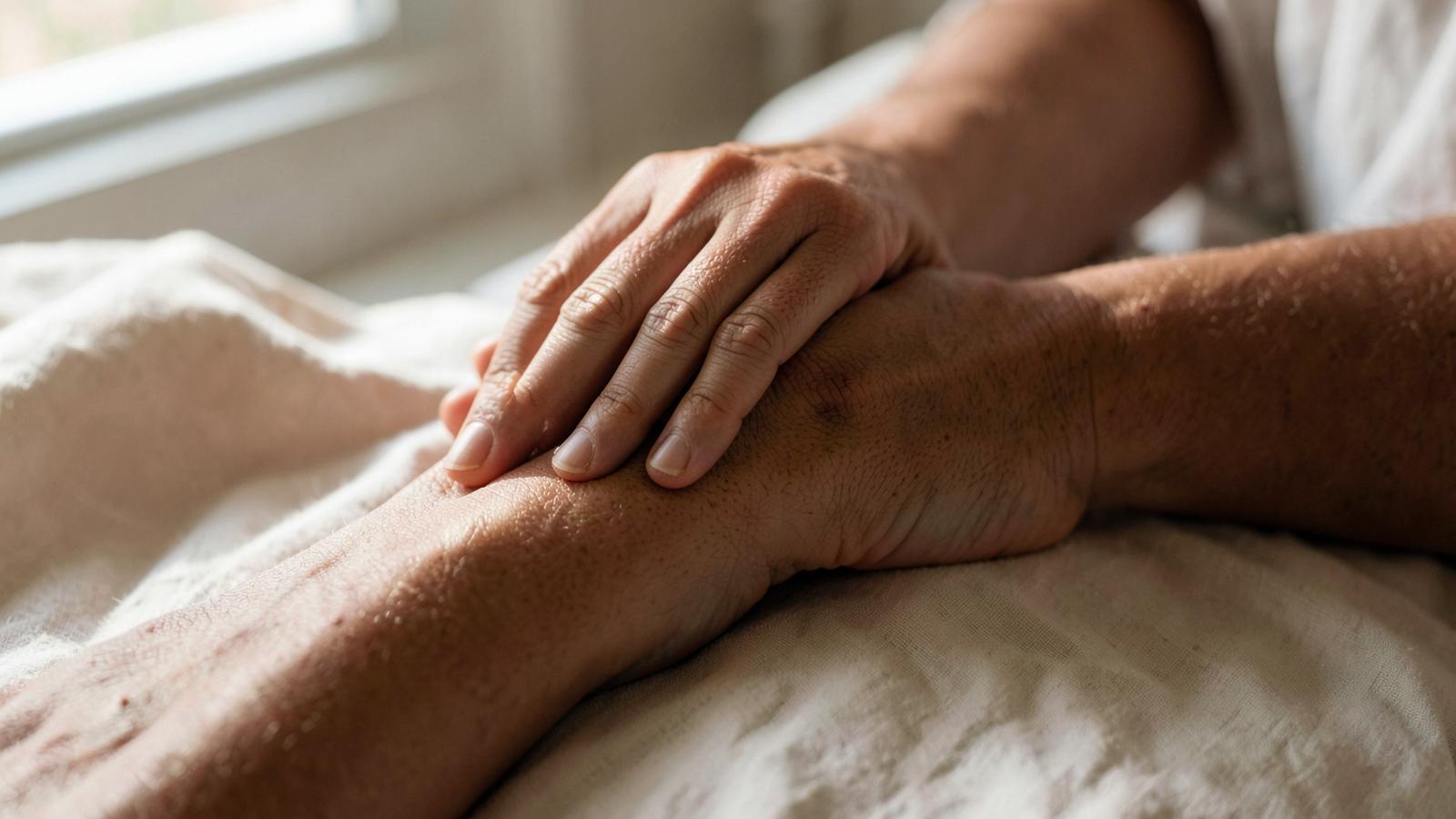
A hand on the shoulder, the pressure of the floor under your feet, warmth on the skin — touch is not merely sensation. It is continuous information the nervous system uses to map the body and the world.
Skin is often described as a barrier, but it is also a vast sensory interface. Different receptors respond to pressure, vibration, stretch, temperature and potentially damaging stimuli. The brain combines those signals with information from muscles, joints, vision and the inner ear to create a working model of the body in space.
Touch therefore begins in the skin but does not end there. A sensation becomes meaningful through processing in the spinal cord and brain, and that meaning can change with context, attention, expectation and previous experience.
Different receptors, different information
Mechanoreceptors specialize in different aspects of touch. Some respond quickly to vibration or changing contact; others respond more slowly to sustained pressure or skin stretch. Receptor density varies across the body, which is why fingertips can distinguish fine spatial detail much better than the back.
Thermoreceptors signal temperature changes, while nociceptors respond to potentially harmful mechanical, thermal or chemical conditions. Pain is not simply a direct meter of tissue damage; it is a protective perception constructed from sensory input and context.
Proprioception: knowing where you are without looking
Close your eyes and touch your nose. You can do it because the nervous system receives information from muscle spindles, tendons and joints about limb position and movement. This sense is called proprioception.
Balance and coordinated movement depend on integrating proprioception with vision and vestibular information. Strength training, dance, yoga and ordinary movement all give the nervous system rich sensory feedback about force and position.
Pressure can change perception
Firm pressure, compression garments, weighted blankets and massage are often described as calming. Some people do experience reduced arousal or improved comfort, possibly through sensory gating, attention, expectation and autonomic effects. But responses are individual and clinical evidence differs by condition.
The important point is not that pressure "switches off the nervous system." It changes incoming sensory information, and the brain interprets that information in context.
Massage is more than "breaking knots"
Massage can change local sensation, blood flow, muscle tone and perceived soreness. It may temporarily improve range of motion or reduce pain for some conditions. The old image of physically crushing "toxins" out of muscle is not accurate.
Muscle "knots" are not literal knots in fibres. Tender spots can involve muscle, fascia, nerves and central pain processing. Manual therapy may be useful as one input among movement, recovery and rehabilitation rather than as a mechanical repair job.
Social touch has biology too
Gentle social touch can influence emotion, bonding and stress perception. Certain slow-conducting sensory fibres are thought to contribute to affective touch, and social context strongly shapes how touch is experienced. The same physical contact can feel comforting, neutral or threatening depending on consent, relationship and expectation.
This is a reminder that sensory physiology cannot be separated from meaning. The nervous system is not a passive cable receiving pressure; it is an interpretive system.
Heat, cold and the sensory map
Warmth and cold alter sensory nerve activity and blood flow. Heat can reduce stiffness and feel soothing; cold can temporarily reduce pain and nerve conduction. Neither is universally superior. The right tool depends on the problem, timing and person.
Extreme temperatures can injure tissue even when used with therapeutic intent. Numb areas are especially vulnerable because sensory feedback is reduced.
Touch and nervous-system regulation
Breathing, posture, movement and touch can all change the sensory input reaching the brain. This helps explain why body-based practices may change perceived stress or safety. But the nervous system is not a simple "vagus nerve switch," and one technique cannot reliably reset every person.
A more accurate framework is repeated regulation: giving the nervous system tolerable sensory experiences that support movement, confidence and recovery.
The Ika's Realm takeaway
Touch is one of the oldest information systems in the body. Before language, before screens, before instruments, living tissue was already reading pressure, stretch, heat and movement. The skin is not the edge of the nervous system; it is part of the conversation.
Key takeaways
- Skin is a continuous information system, not just a boundary.
- Different receptors report pressure, stretch, temperature and movement.
- Slow, gentle touch has its own signalling pathway.
- New numbness, weakness or loss of sensation needs medical evaluation.
Enjoyed this?
Get the next one straight to your inbox.
Keep reading
Related articles
Explore more natural food, fermentation and wellness ideas from Ika’s Realm.

Psychobiology — How the Mind, Body and Energy Systems Are Connected
A thought can change a heartbeat. A stressful week can change sleep and appetite. A slow exhale can change autonomic activity. Psychobiology studies the loops linking experience, brain, hormones, immunity and metabolism.
The Body Is Electric — The Tiny Voltages That Keep Us Alive
Every nerve impulse, heartbeat and muscle contraction depends on controlled movement of charged particles. Bioelectricity is not metaphorical; it is one of the basic languages of living tissue.

The Five-Minute Morning Reset for a Noisy Mind
A short, repeatable sequence of breath, light and one written line — designed for people who don't have a spare hour.