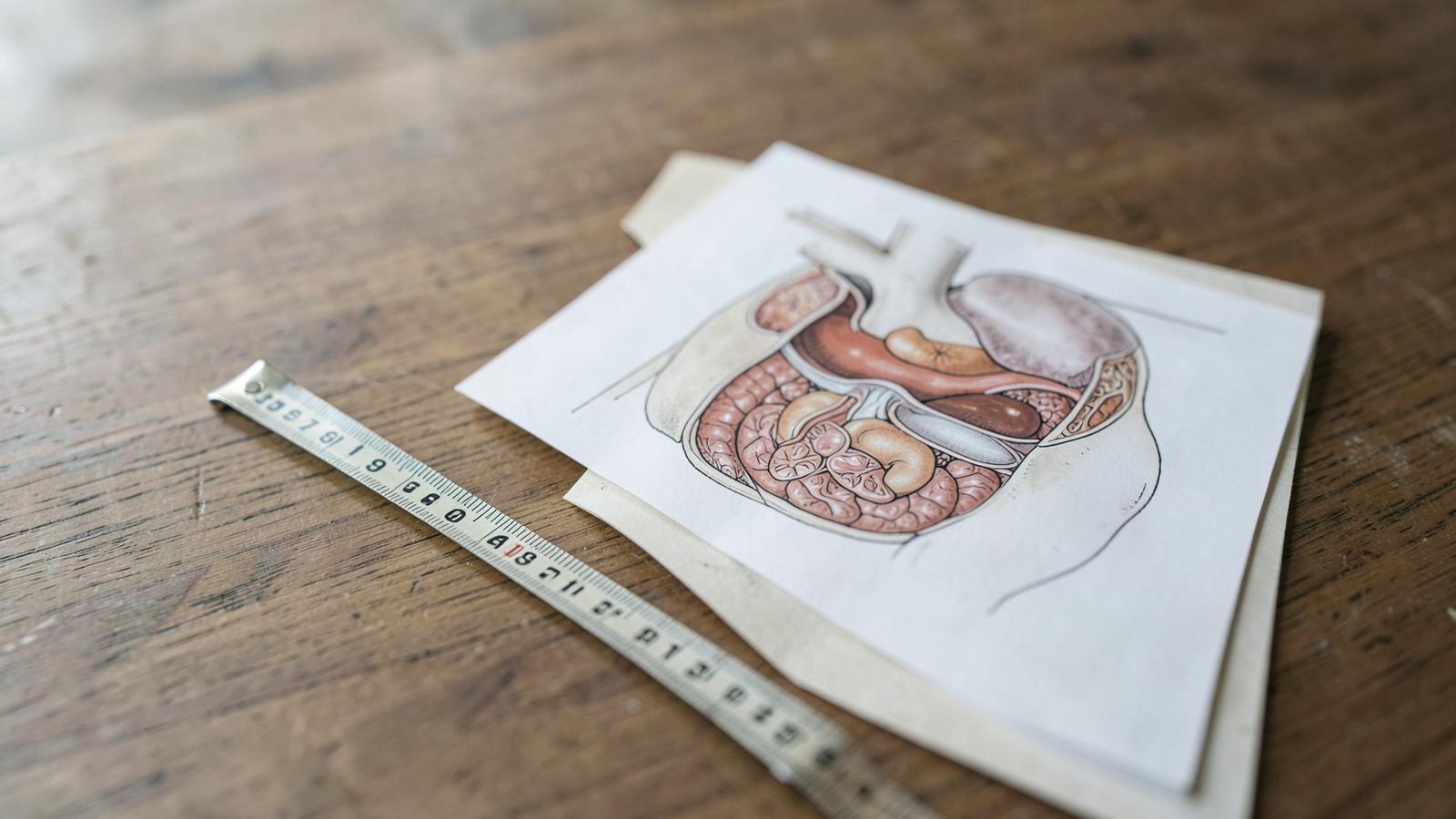
Two people with the same weight can carry fat in very different places. Where fat is stored — under the skin, around organs or inside organs — can matter as much as the number on the scale.
Body fat is often discussed as if it were one uniform tissue. It is not. Subcutaneous fat sits beneath the skin. Visceral adipose tissue lies deeper in the abdomen around internal organs. Ectopic fat refers to fat stored in tissues not designed to be major fat-storage depots, such as the liver, skeletal muscle, heart and pancreas.
These categories overlap in everyday language, which is why people sometimes call all deep abdominal fat "ectopic fat." A clearer distinction is useful: visceral fat is a specific abdominal fat depot; ectopic fat describes lipid accumulation within or around organs and other non-adipose tissues.
Why subcutaneous fat can be protective
Adipose tissue is not just passive storage. Healthy subcutaneous fat can safely store excess energy as triglycerides. It also releases hormones and signalling molecules. When the capacity to store fat subcutaneously is exceeded or adipose tissue becomes dysfunctional, more lipid may "spill over" into visceral and ectopic sites.
This helps explain why body mass index alone cannot reveal metabolic health. A person may have a higher BMI with relatively favourable fat distribution, while another person with a lower BMI may carry more visceral or liver fat.
Visceral fat is metabolically active
Visceral adipose tissue is strongly associated with insulin resistance and cardiometabolic risk. It is biologically active, releases fatty acids into the portal circulation and produces inflammatory and endocrine signals. Large epidemiologic datasets show that greater visceral fat is associated with higher risk of type 2 diabetes and cardiovascular disease.
Waist circumference can provide a rough population-level clue about central fat, but it cannot tell us exactly how much fat is visceral versus subcutaneous. CT and MRI can quantify internal fat more accurately, though they are not used routinely simply for curiosity.
Ectopic fat in the liver
The liver is one of the most important ectopic fat sites. Metabolic dysfunction-associated steatotic liver disease (MASLD) involves excess liver fat in a metabolic context and is strongly associated with insulin resistance and type 2 diabetes. Liver fat can change substantially with weight loss and improvements in energy balance.
It is important not to frame fatty liver as a cosmetic extension of "belly fat." It is an organ-level metabolic condition. Many people have no symptoms, so risk factors and blood tests may lead to further assessment by a clinician.
The pancreas and muscle are more complicated
Fat can also accumulate in and around the pancreas and within skeletal muscle. Research links pancreatic fat with metabolic risk, but the exact causal relationships between pancreatic fat, beta-cell function and diabetes remain under investigation. Intramuscular lipid is even more context-dependent: trained endurance athletes can carry substantial lipid droplets inside muscle while remaining highly insulin-sensitive — sometimes called the athlete's paradox.
The lesson is that location alone is not the full story. The type of lipid, cellular handling, fitness level and surrounding metabolic environment matter.
Can visceral and ectopic fat be reduced?
Yes. Lifestyle interventions that produce sustainable weight loss can reduce visceral and liver fat, and exercise can improve insulin sensitivity even before dramatic changes appear on the scale. Systematic reviews show that diet and exercise interventions reduce ectopic fat, particularly in the liver.
There is no exercise that selectively "burns belly fat" from one area. Abdominal exercises strengthen abdominal muscles but do not control where fat is mobilized. Genetics, sex hormones, age and overall energy balance influence distribution.
Movement may help even without huge weight loss
Aerobic exercise and resistance training both support metabolic health. Exercise increases muscle glucose uptake, improves cardiorespiratory fitness and can reduce visceral fat. Combining movement with a diet that supports an appropriate energy intake often produces the strongest changes.
Sleep and alcohol intake also matter. Short sleep can disrupt appetite and glucose regulation, while alcohol can contribute to liver fat in susceptible individuals. None of these factors operates alone, so a realistic plan is usually more effective than a "flat belly" protocol.
What about menopause and age?
Fat distribution can shift with age and hormonal changes. After menopause, many women experience a greater tendency toward central fat accumulation even if total body weight changes only modestly. That does not mean abdominal fat is inevitable or a personal failure. It means the metabolic and hormonal context has changed, making resistance training, protein adequacy, sleep and overall energy balance especially relevant.
Clinical conditions and medications can also alter weight and fat distribution, so sudden or unexplained changes deserve assessment rather than self-blame.
The Ika's Realm takeaway
The scale cannot tell us where energy is stored. Visceral and ectopic fat are important because they remind us that metabolism is about distribution and tissue function, not appearance alone. The most evidence-based approach is not to "attack belly fat," but to improve the conditions that govern storage and fuel use: regular movement, sufficient muscle stimulus, sustainable nutrition, sleep, and medical care when metabolic disease is present.
Key takeaways
- Where fat is stored matters, not only how much there is.
- Visceral fat sits around organs; ectopic fat sits inside them.
- Weight alone cannot show fat distribution.
- Metabolic concerns deserve clinical assessment, not self-diagnosis by body shape.
Enjoyed this?
Get the next one straight to your inbox.
Keep reading
Related articles
Explore more natural food, fermentation and wellness ideas from Ika’s Realm.
Does the Order You Eat Food Affect Blood Sugar?
Eating vegetables and protein before carbohydrates may change the glucose response after a meal. What the studies show, and how much it really matters.

Intermittent Fasting vs Longer Fasting — What Actually Happens Inside the Body?
Fasting is not one single state. A skipped breakfast, a 16-hour eating window, a 24-hour fast and several days without food create different levels of metabolic stress — and human biology does not run on an exact internet stopwatch.
The Collagen-Support Plate: Feed the Building Process
Your body makes its own collagen, and it needs ordinary nutrients to do it. What a genuinely supportive plate looks like, beyond the supplement aisle.