Your body makes its own collagen, and it needs ordinary nutrients to do it. What a genuinely supportive plate looks like, beyond the supplement aisle.
Collagen is the most abundant protein in the body, and the supplement aisle would like you to believe it arrives in a scoop.
In reality, your body manufactures its own collagen continuously, and it needs a fairly ordinary set of nutrients to do so. A supportive plate is less exotic than the marketing suggests — and considerably more achievable.
How the body actually makes collagen
Collagen synthesis happens inside cells such as fibroblasts. Amino acids — particularly glycine, proline and lysine — are assembled into chains, which are then chemically modified before being wound into the triple helix that gives collagen its strength.
Several of those modification steps depend on specific nutrients acting as cofactors. Vitamin C is required for the hydroxylation of proline and lysine, and copper is needed for the enzyme that cross-links mature collagen fibres.
This is the honest framing: foods supply amino acids and micronutrients involved in normal collagen synthesis. They do not directly rebuild collagen, and no meal deposits collagen into skin or cartilage.
Protein first
Adequate total protein is the foundation, because every structural protein is built from amino acids. Eggs, fish, poultry, meat, dairy, legumes, tofu and tempeh all contribute.
Glycine and proline are especially relevant to collagen. They are abundant in connective tissues, which is why slow-cooked cuts, bone broth, skin-on fish and gelatine are traditionally associated with this idea.
Plant eaters are not disadvantaged in any dramatic way; the body can make glycine and proline, and a varied diet with legumes, soy, seeds and wholegrains supplies plenty of raw material.
The micronutrients that matter
Vitamin C contributes to normal collagen formation — a recognised nutritional role. Berries, peppers, kiwi, citrus, blackcurrants and broccoli make reaching an adequate intake straightforward.
Zinc and copper are both involved in tissue maintenance and appear in nuts, seeds, seafood, shellfish, legumes and wholegrains. Deficiency is uncommon in a varied diet but not unheard of.
Iron plays a role in the same hydroxylation reactions as vitamin C, and adequate protein-rich foods usually cover it alongside everything else.
What a supportive plate looks like
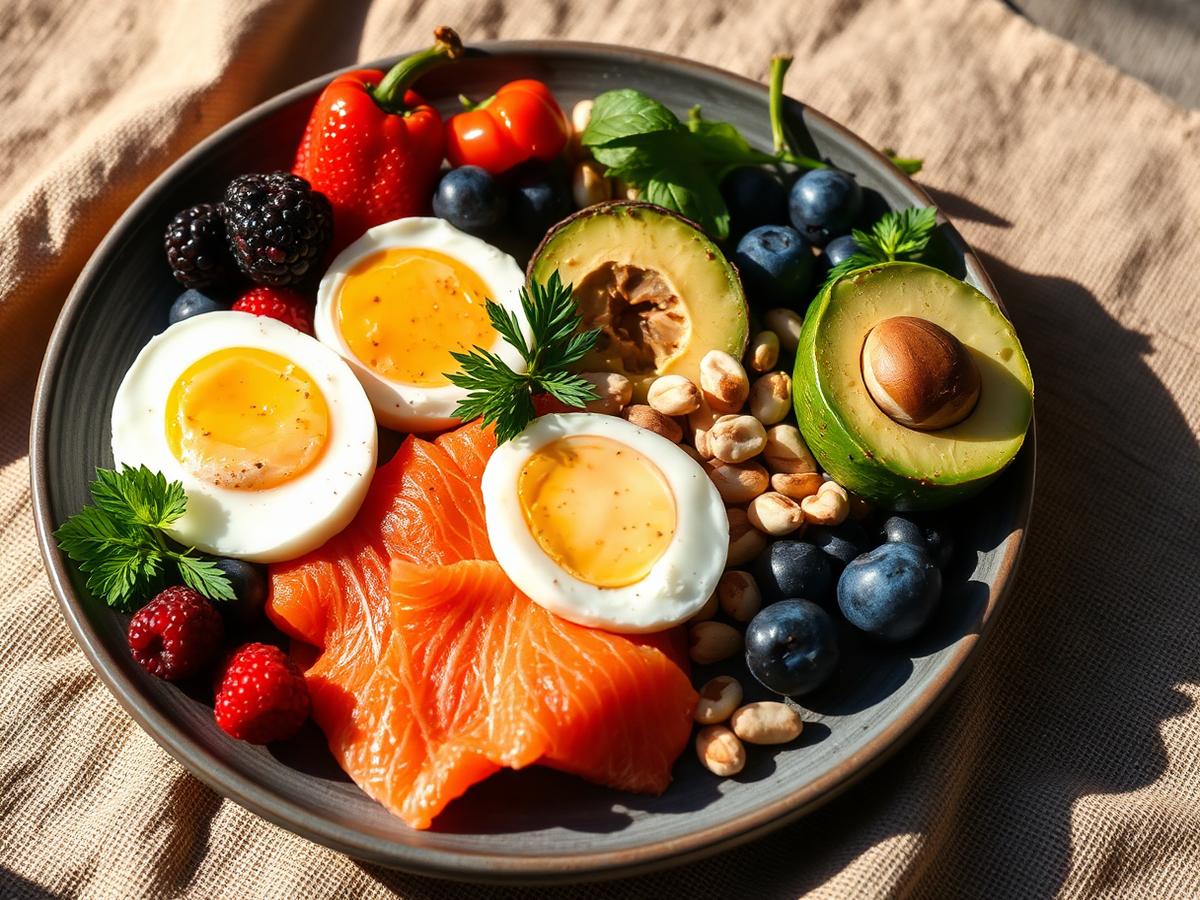
Picture grilled salmon or a couple of eggs, a large salad of peppers, tomatoes and leaves dressed with olive oil, a scattering of pumpkin seeds, and a bowl of berries afterwards.
There is nothing unusual there. It is simply a colourful, protein-adequate, vegetable-heavy meal — which is rather the point of the whole idea.
Consistency matters more than composition. Collagen turnover happens over months and years, so a supportive pattern of eating counts for far more than any single impressive-looking plate.
What about collagen supplements?
Collagen peptides are digested like other proteins, broken into amino acids and small peptides before absorption. They are not delivered intact to the skin.
Some trials have reported modest improvements in skin hydration and elasticity with hydrolysed collagen peptides, though many studies are small, short and industry-funded. It is an open question rather than a settled one.
If you enjoy them and can afford them, they are unlikely to do harm. They are not a substitute for adequate protein and a varied diet, and they should not be presented as one.
Limitations and other factors
Nutrition is one input among many. Age is the largest single factor in declining collagen, and it is not negotiable.
Ultraviolet exposure degrades dermal collagen substantially, which makes sun protection the most evidence-backed skin intervention available. Smoking has a similarly well-documented negative effect.
Sleep, physical activity, weight stability and general health all feed into tissue maintenance. A supportive plate helps, but it cannot outrun the rest of a lifestyle.
Anyone with a diagnosed condition, food allergies or specific dietary requirements should take individual advice rather than general guidance from an article.
Key takeaway
Foods supply the amino acids and micronutrients involved in normal collagen synthesis — nothing more dramatic and nothing less useful. Eat enough protein, eat plenty of colour, wear sunscreen, and give it years rather than weeks.
Key takeaways
- Foods provide amino acids and micronutrients involved in collagen synthesis; they do not rebuild collagen directly.
- Protein, vitamin C, zinc and copper are the key nutritional inputs.
- Sun exposure, smoking and age matter as much as diet.
- A varied, colourful plate beats a single supplement.
Enjoyed this?
Get the next one straight to your inbox.
Keep reading
Related articles
Explore more natural food, fermentation and wellness ideas from Ika’s Realm.

Bee Pollen: Nutrient-Rich Food or Nature's Multivitamin?
Bee pollen is genuinely nutrient-dense and genuinely variable. A calm look at what it contains, what it cannot replace, and who should be careful.

Does the Order You Eat Food Affect Blood Sugar?
Eating vegetables and protein before carbohydrates may change the glucose response after a meal. What the studies show, and how much it really matters.

Calendula & Rosehip Face Oil You Can Infuse at Home
A gentle botanical oil for dry or reactive skin, with honest notes on shelf life, patch testing and what not to put on your face.