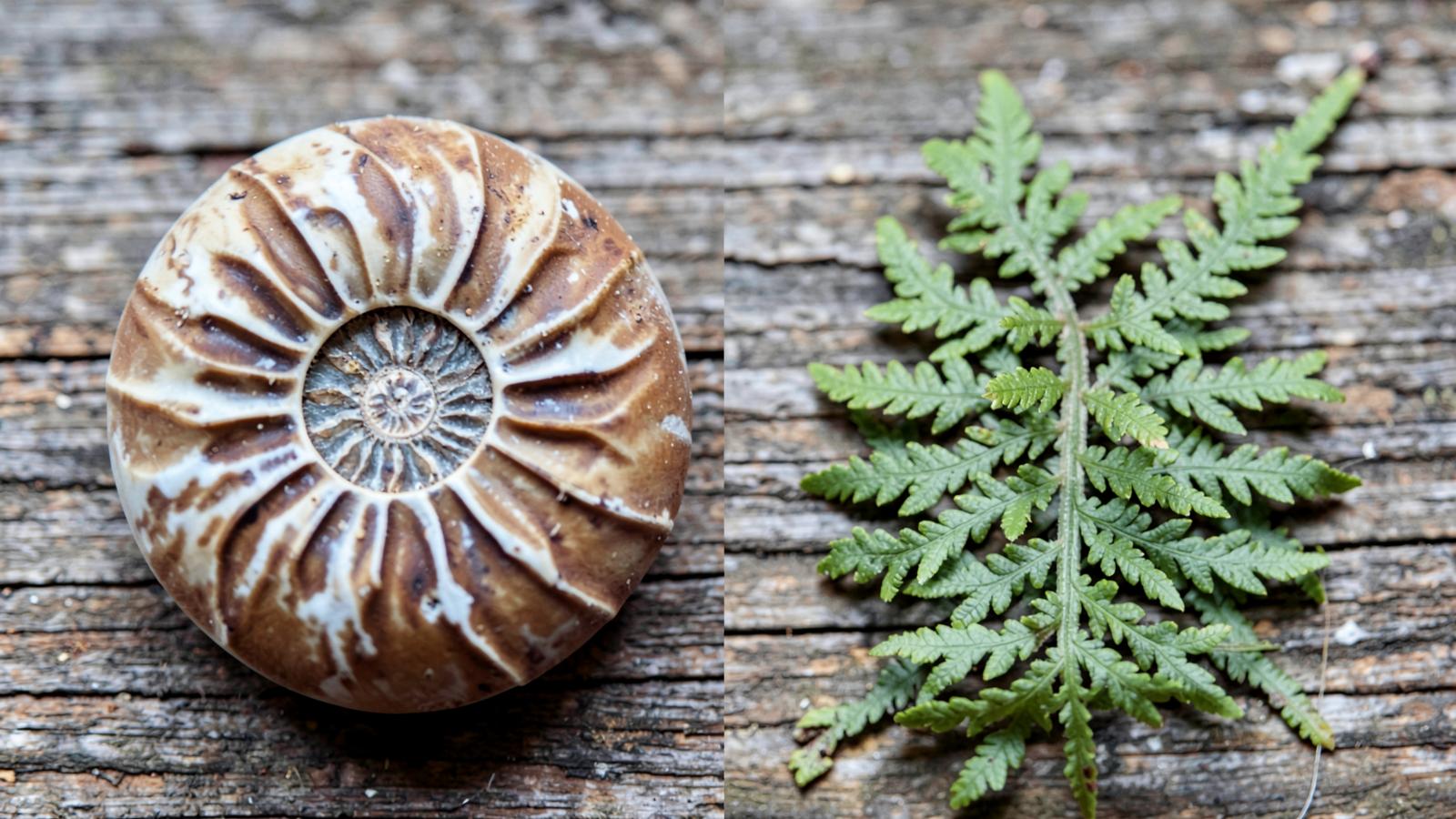
Storage, networks, filters, feedback, insulation, pumps, sensors and self-repair did not begin in factories. Living systems have been solving physical problems for billions of years.
A leaf does not know the word "solar." A tree does not calculate fluid dynamics. A termite colony does not draw architectural plans. Yet living systems move water, exchange gases, regulate temperature, store energy, detect damage and adapt to changing environments.
Biomimicry begins with a simple shift in attention: instead of asking only "What can we extract from nature?" ask "How does nature solve this kind of problem?" The answer is not always directly transferable, but the question can reveal principles that conventional engineering overlooks.
Networks appear again and again
Leaf veins distribute water and export sugars. Blood vessels distribute oxygen and nutrients. Fungal mycelium explores soil. River deltas divide and recombine flow. Branching patterns appear because many systems need to move material between a large surface area and a smaller set of trunks or hubs.
Engineers use network theory to optimize transport, communications and utilities. Nature's networks are not mathematically perfect, but they are often resilient because they balance efficiency with redundancy. A single break does not always collapse the whole system.
Gradients are hidden engines
Life constantly uses differences: proton gradients across mitochondrial membranes, sodium gradients across cell membranes, water-potential gradients in plants, oxygen gradients across respiratory surfaces. These differences store potential that can drive movement and work.
Human technology does the same with electrical voltage, water pressure, temperature differences and chemical concentration. The analogy is not superficial. In both engineered and biological systems, controlling a gradient can control a flow.
Feedback keeps systems within workable limits
Body temperature, blood glucose, water balance and hormone levels are regulated through feedback. Plants adjust stomata in response to water status and light. Microbial populations change according to nutrient supply and competition.
Feedback does not mean perfect stability. Living systems fluctuate. They remain within ranges compatible with survival, and those ranges can shift. Engineers call related ideas control systems, adaptive control and homeostasis-inspired design.
Materials that grow, repair and disappear
Bone is light for its strength and continuously remodelled. Spider silk combines strength with flexibility. Shells build complex composites from abundant minerals. Fungal mycelium can bind agricultural fibres into low-density materials. Living materials are often assembled at modest temperatures in water-based environments — very different from high-heat industrial processing.
Biomaterials research asks whether construction, packaging and textiles can borrow some of those strategies. The challenge is scale, durability, fire resistance, moisture and cost. Nature is an inspiration, not a ready-made catalogue.
Ventilation without air-conditioning
Termite mounds are frequently cited as natural air-conditioning systems. The real biology is more complex than the popular story: mound architecture, colony heat, soil conditions and daily temperature cycles interact to drive gas exchange. Still, termite nests have inspired passive-ventilation concepts in architecture.
The broader principle is valuable: shape and material can manage energy flows before mechanical systems are added. A building that uses orientation, shading, thermal mass and natural ventilation can reduce the amount of active cooling required.
Sensors everywhere
Plants sense light direction, gravity, touch, water status and chemical signals. Bacteria sense nutrient gradients. Animals integrate vision, smell, vibration and temperature. Sensing is not a luxury added after a system works; it is part of how living systems remain adaptive.
Modern technology is moving in the same direction through distributed sensors, smart grids, responsive materials and automated control. The question is how to gain adaptability without creating unnecessary complexity or waste.
Nature is not automatically sustainable
Romanticizing nature can be as misleading as ignoring it. Evolution optimizes reproductive success under local constraints, not human ethics or global sustainability. Parasites, toxins and wasteful competition are also natural. A biological strategy that works in one context may be inefficient or dangerous in another.
Biomimicry is strongest when it asks specific functional questions and tests the answer. "Nature does it, therefore it is better" is not enough.
The Ika's Realm method
For each system, we can ask five questions: What problem is being solved? What flows through the system — energy, water, matter, information? What gradients or feedback loops drive it? How does it respond to damage or variability? And which principle can be translated without copying the shape blindly?
This framework can connect articles on mitochondria, leaves, homes, batteries, fermentation and future energy. The subjects look different on the surface, but underneath they share flows, storage, thresholds, feedback and adaptation.
The Ika's Realm takeaway
Nature did not "invent" technology in the human sense. But life has explored a vast design space under physical laws for billions of years. When we look closely, we find recurring strategies: use gradients, distribute through networks, sense conditions, recycle components, build with hierarchy and adapt rather than resist every change.
That is not a reason to copy nature blindly. It is a reason to become better observers.
Key takeaways
- Storage, networks, filters and feedback all existed in living systems first.
- Nature works under physical constraints, not design meetings.
- Recurring strategies include gradients, networks, sensing and recycling.
- Copying nature well starts with observing it carefully.
Enjoyed this?
Get the next one straight to your inbox.
Keep reading
Related articles
Explore more natural food, fermentation and wellness ideas from Ika’s Realm.
The Leaf Is a Solar Panel — How Living Systems Capture Light
A leaf and a photovoltaic panel both harvest sunlight, but they solve the problem in radically different ways. One makes electrical current; the other builds chemistry, structure and life.
Blue Energy — Can We Harvest Power Where Rivers Meet the Sea?
When fresh water and salt water mix, a concentration difference disappears. That difference contains usable free energy. "Blue energy" technologies try to capture part of it before the waters fully mix.
Kombu: More Than Seaweed — Umami, Minerals & the Art of Japanese Broth
A beginner's guide to the sea kelp behind dashi: what it is, how to use it, how to store it, and why more is not better.