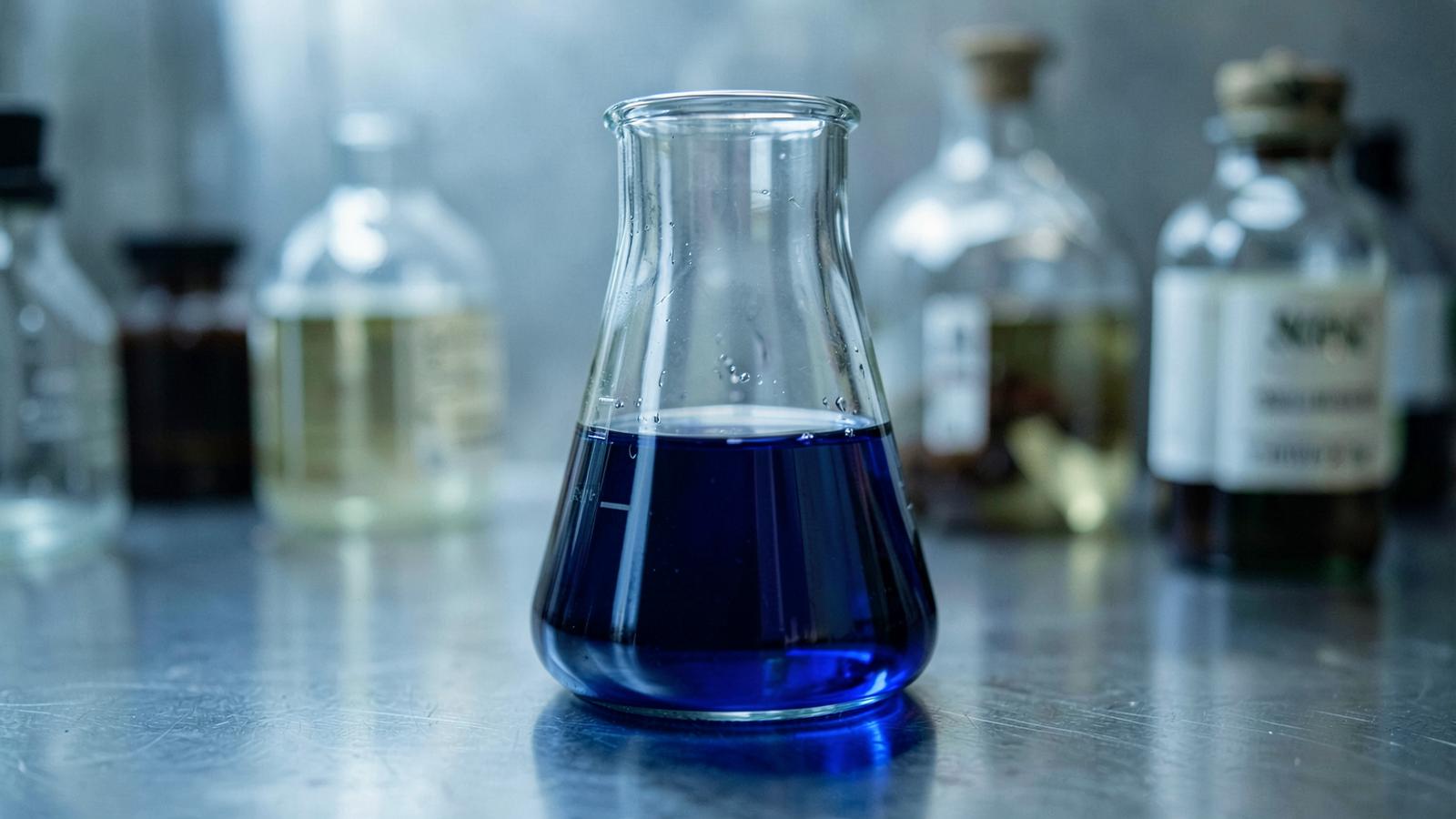
Methylene blue is not a new "biohacking dye." It is a pharmacologically active compound with established medical uses, a long scientific history and potentially serious interactions. That makes it interesting — and exactly the wrong substance to treat casually.
Methylene blue is a synthetic dye with a history stretching back to the nineteenth century. It became important in microscopy and medicine and remains a clinically used drug for specific indications, including treatment of acquired methemoglobinemia. It also appears in surgical and diagnostic contexts.
That history matters because wellness social media often presents methylene blue as if someone recently discovered a harmless blue supplement that "charges mitochondria." In reality, it is pharmacologically active. The same chemistry that makes it medically useful also creates meaningful risks and drug interactions.
Why mitochondria enter the conversation
Methylene blue can participate in redox reactions and, in experimental systems, can accept and donate electrons. Researchers have explored whether this chemistry could influence mitochondrial electron transport, oxidative stress and brain metabolism. Preclinical work has generated interest in neurodegenerative disease, cognition and cellular resilience.
But "has interesting mitochondrial effects in a laboratory" is not the same as "healthy people should take it for more energy." Clinical dose, route, purity, indication and patient characteristics matter. A compound can be both scientifically fascinating and inappropriate for unsupervised use.
The serotonin interaction is not a minor footnote
Methylene blue can inhibit monoamine oxidase A. When combined with serotonergic medicines, this can contribute to serotonin syndrome — a potentially life-threatening condition involving mental-status changes, autonomic instability, neuromuscular abnormalities and gastrointestinal symptoms. FDA labelling for intravenous methylene-blue-class products includes a prominent warning about serotonin syndrome with serotonergic drugs and some opioids.
This is one reason an article about methylene blue must not become a "how to use it" guide. A person may not realise that an antidepressant, opioid, dextromethorphan-containing cough medicine or other drug affects serotonin.
G6PD deficiency and haemolysis risk
People with glucose-6-phosphate dehydrogenase (G6PD) deficiency can be vulnerable to oxidative haemolysis with certain drugs, including methylene blue, and methylene blue may be ineffective or harmful in this context. G6PD deficiency is more common in some populations and may be unknown until a trigger occurs.
This illustrates why "small dose" does not equal "universally safe dose." Risk can depend on genetics, medicines and medical condition rather than body size alone.
Pharmaceutical grade versus industrial or aquarium products
Methylene blue is used outside medicine in laboratories, industry and aquariums. Products sold for non-human use may not meet pharmaceutical standards for identity, purity, sterility or contaminants. They should not be repurposed for ingestion or medical skin treatment.
Even a product marketed online as "USP grade" is not automatically an appropriate self-treatment. Quality is only one part of safety; indication, dose and interactions remain.
What about applying methylene blue to skin?
Laboratory and early dermatology research has explored methylene blue in oxidative stress, skin ageing and photodynamic contexts. But topical claims on social media often mix very different concepts: a dye used as a photosensitizer in a medical procedure, experimental antioxidant research, and homemade cosmetic application.
Skin can absorb compounds, formulations influence penetration, and methylene blue intensely stains tissue and materials. There is not enough evidence to justify presenting DIY topical use as an established anti-ageing treatment. Medical photodynamic therapy protocols should not be recreated at home.
Methylene blue plus red light?
This pairing is especially likely to confuse readers because methylene blue has photochemical properties and red light is used in photobiomodulation. A photosensitizer plus light can deliberately generate reactive species in photodynamic therapy, while PBM aims for non-destructive signalling effects. They are not interchangeable.
Combining compounds and light without understanding wavelength, concentration and tissue chemistry could change the biological effect completely. "Both affect mitochondria" is not a sufficient rationale for combining them.
Why the hype is persuasive
Methylene blue has all the ingredients of a viral wellness story: it is visually striking, old enough to feel forgotten, scientifically real, inexpensive in some forms and connected to mitochondria. Each fact is true, but the story becomes misleading when those truths are stitched into a clinical promise that has not been demonstrated.
The more pharmacologically active a substance is, the more important it is to resist the idea that "natural curiosity" means casual experimentation.
The Ika's Realm takeaway
Methylene blue belongs on Ika's Realm as a case study in how medicine, cellular chemistry and internet wellness collide. It is not a villain, and it is not a miracle dye. It is a drug with specific medical uses, active biochemical effects, unresolved research questions and real contraindications.
Key takeaways
- Methylene blue is a pharmacologically active drug with established medical uses.
- It has real biochemical effects and real contraindications.
- Serotonergic medication and G6PD deficiency are serious concerns.
- This article gives history and science, never dosing or DIY instructions.
Enjoyed this?
Get the next one straight to your inbox.
Keep reading
Related articles
Explore more natural food, fermentation and wellness ideas from Ika’s Realm.

Mitochondria — The Tiny Energy Systems We Still Don't Fully Understand
They are often called the "powerhouses of the cell," but mitochondria are far more than miniature batteries. They sense, signal, divide, fuse, recycle and help decide how a cell responds to stress.
Urolithin A — Gut Microbes, Mitophagy and Mitochondrial Renewal
A compound found in pomegranates does not simply "become urolithin A" in everyone. Gut microbes transform ellagitannins into metabolites, and only some people produce meaningful amounts. That makes urolithin A a fascinating story about food, microbes and mitochondrial research.
Red Light and the Human Body — What Photobiomodulation May Actually Do
Red and near-infrared light can interact with tissue in ways that influence cellular signalling. The science is real — but the clinical evidence is uneven, the dose matters, and consumer marketing often promises more than research can support.