Magnesium Oil: Why It Feels Oily Even Though It Contains No Oil
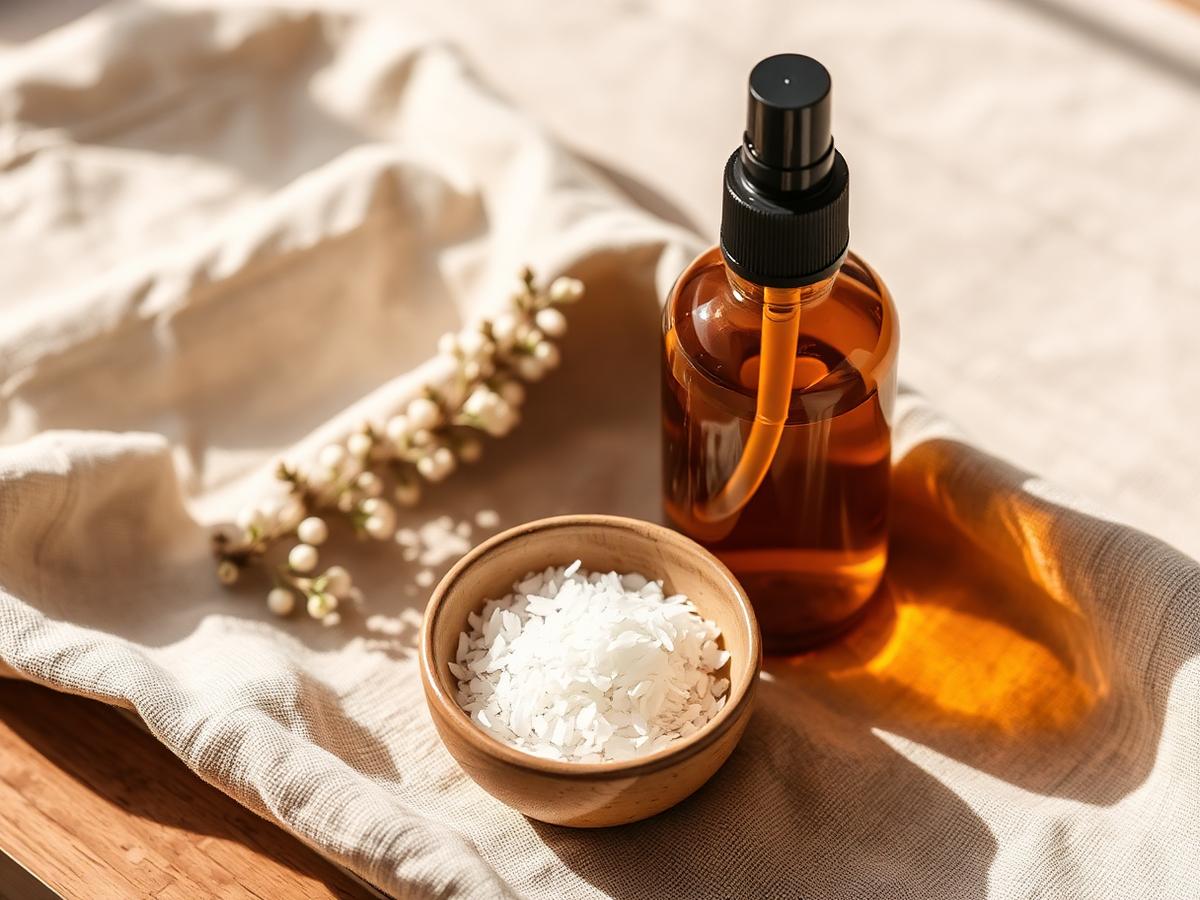
Magnesium oil is a concentrated magnesium chloride solution, not an oil at all. What it is, how to make it, and what the evidence does and does not show.
Magnesium oil is one of the great misnomers of the natural body-care shelf. There is no oil in it whatsoever.
What there is, is a very concentrated solution of magnesium chloride in water — and a texture so unexpectedly slippery that the name stuck anyway.
What it actually is
Magnesium chloride is a salt that dissolves readily in water. At high concentrations the resulting solution is dense and viscous, and it leaves a faintly soapy, slippery film on the skin.
That sensation is pure physics: a saturated salt solution simply feels different from water. It is not an emollient, it does not moisturise, and it contains no lipids of any kind.
Commercial versions are often made from magnesium-rich brine deposits and sold as flakes or ready-mixed sprays. The homemade version uses the same flakes and warm distilled water.
How people use it
The most common routine is a few sprays onto the legs, shoulders, feet or lower back after a bath or shower, followed by a couple of minutes of massage.
Some people leave it on; others rinse after twenty minutes or so, particularly if the residue feels tacky as it dries. Both approaches are fine.
It is frequently folded into a wind-down ritual before bed, alongside stretching or a warm shower. As a ritual, it is pleasant, cheap and low-risk.
Making it at home
Warm 100 ml of distilled water without boiling it, then stir in 100 g of magnesium chloride flakes until they dissolve completely. Let it cool fully before decanting into a clean glass spray bottle.
Distilled water is preferable because it contains no minerals or microbes to complicate the solution, and glass avoids the corrosion that concentrated salt can cause with some metal fittings.
A weaker solution — say 100 g of flakes to 150 ml of water — stings less and is a sensible starting point for sensitive skin. Always patch test on a small area first.
What research suggests
Magnesium is unambiguously essential. It is involved in hundreds of enzymatic reactions, including those relating to muscle and nerve function, and dietary deficiency has real consequences.
The question is whether spraying it on intact skin delivers a meaningful amount into the body. The outer layer of skin is an effective barrier to charged mineral ions, and the studies that exist are small, varied in method and inconclusive.
Research has therefore not established topical magnesium as an efficient way to correct a deficiency. Claims that it is the fastest route to raising magnesium levels are not supported by good evidence.
A better route to magnesium
Food remains the dependable option. Nuts, seeds, legumes, wholegrains, leafy greens, dark chocolate and oily fish are all good dietary sources, and they arrive with fibre and other nutrients attached.
If you suspect a deficiency, the appropriate step is a conversation with a clinician rather than a spray bottle. Symptoms attributed to low magnesium overlap with many other conditions.
Oral supplements exist and are effective, but they are not risk-free either, particularly for people with reduced kidney function.
Safety notes
Concentrated magnesium chloride stings sharply on broken, irritated, sunburnt or freshly shaved skin. Avoid those areas entirely.
Keep it away from the eyes and mucous membranes, and rinse thoroughly with plenty of water if contact occurs. Keep the bottle out of reach of children, and do not drink it.
Some people experience tingling or mild redness on first use. Diluting the solution or rinsing after twenty minutes usually resolves this; persistent irritation means it is not for you.
Anyone with kidney disease, taking regular medication, or who is pregnant or breastfeeding should speak to a clinician before using magnesium products routinely.
Key takeaway
Magnesium spray is a salt solution with a curious texture and a pleasant ritual attached. Enjoy it for the massage and the few unhurried minutes; look to food and medical advice for magnesium status.
Recipe card
How to Make Magnesium Spray
Ingredients
- 100 g magnesium chloride flakes
- 100 ml distilled water
Equipment
- A heatproof jug
- A clean glass spray bottle
Method
- 1Warm the distilled water without boiling it.
- 2Stir in the magnesium chloride flakes until fully dissolved.
- 3Allow the solution to cool completely, then transfer it to a clean spray bottle.
- 4Patch test on a small area of skin before wider use.
Storage
Store at room temperature away from direct sunlight and use within a few months.
Ika's Realm notes
- Avoid broken, irritated or freshly shaved skin, where concentrated magnesium chloride can sting sharply.
- Keep away from the eyes and rinse with plenty of water if contact occurs.
Key takeaways
- It is magnesium chloride in water, not an oil.
- Topical absorption for correcting deficiency is not well established.
- Avoid broken or freshly shaved skin, and patch test first.
- Food and clinical advice are the reliable route to magnesium status.
Enjoyed this?
Get the next one straight to your inbox.
Keep reading
Related articles
Explore more natural food, fermentation and wellness ideas from Ika’s Realm.

Calendula & Rosehip Face Oil You Can Infuse at Home
A gentle botanical oil for dry or reactive skin, with honest notes on shelf life, patch testing and what not to put on your face.
Okra Beyond the Kitchen — Exploring Handmade Okra Soap
Okra's famous sliminess is a mucilage — and mucilage is genuinely interesting to soap makers. An exploratory guide, with two very different methods.

The Collagen-Support Plate: Feed the Building Process
Your body makes its own collagen, and it needs ordinary nutrients to do it. What a genuinely supportive plate looks like, beyond the supplement aisle.