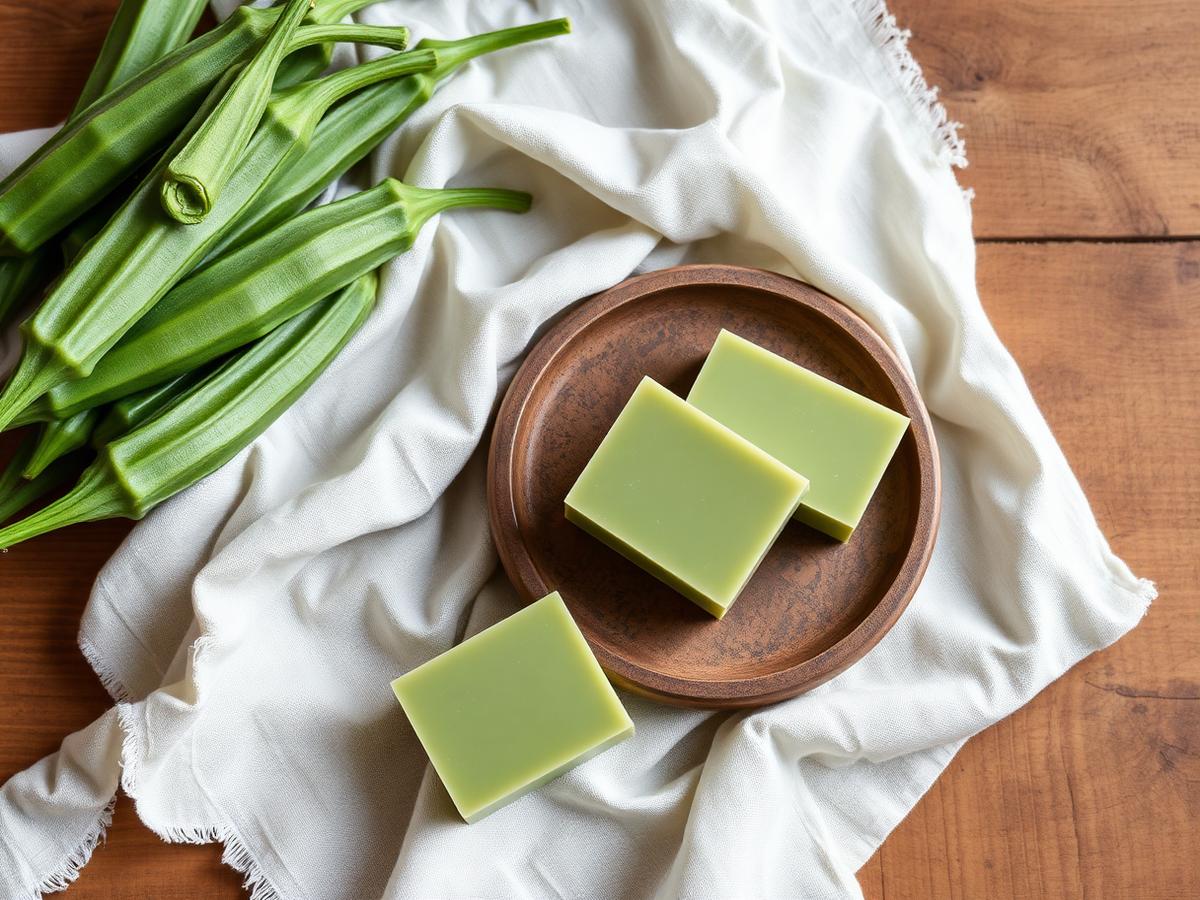
Okra's famous sliminess is a mucilage — and mucilage is genuinely interesting to soap makers. An exploratory guide, with two very different methods.
Okra is best known for the quality that divides cooks: its sliminess. That slipperiness is mucilage — a viscous mix of polysaccharides and glycoproteins the plant produces to hold water and protect its tissues. Slice a pod and it appears immediately; that is the plant doing its job, not a defect.
Mucilage is interesting well beyond the kitchen. In cosmetic formulation, polysaccharide mucilages from plants like flaxseed, marshmallow root, aloe and okra are valued for slip, for film-forming, and for the cushioned, softened feel they give a product. They also hold water at a surface, which is why so many traditional preparations centre on them.
The botanical inspiration here is genuine and old. Okra pods and their soaking water appear in West African, Caribbean and South Asian traditions as hair rinses and skin preparations, valued for their slippery, conditioning feel. That is a tradition worth respecting — and worth being precise about. Traditional use tells us people found it pleasant and useful; it does not, by itself, tell us what the ingredient does at a physiological level.
How might okra get into a bar of soap? Practically, as a liquid. Simmer chopped pods in water, let it cool, strain the resulting mucilaginous liquid, and use it as part or all of the water phase in your soap recipe. Some makers instead add a small amount of the strained gel at trace, after the lye has reacted, though anything added at that stage still meets a highly alkaline environment.
Be realistic about what survives saponification. Lye is aggressive and heat-generating, and delicate plant compounds do not come through unchanged. What tends to remain is a contribution to lather feel and a slight colour — not a preserved botanical extract. Plant additives also carry sugars, which can accelerate trace and cause the batch to overheat, so keep the quantity modest.
Fresh plant material also carries water and microbes. Strain thoroughly, use the liquid the same day, and keep the total plant liquid to a sensible fraction of your water phase.
COLD-PROCESS METHOD (experienced makers only). Prepare 200 g of strained, cooled okra liquid and use it as your lye liquid at the ratio your recipe specifies. A workable beginner-scale oil blend is 400 g olive oil, 250 g coconut oil and 100 g shea butter. Run the exact figures through a reputable lye calculator — never reuse someone else's numbers, including these, without recalculating for your own oils and superfat. Add the lye to the cold okra liquid slowly, outdoors or under extraction, and let it cool to 40-45°C. Warm the oils to a similar temperature, combine, and blend to a light trace. Pour, insulate lightly, and unmould after 24-48 hours. Cut and cure on a rack in a ventilated room for 4-6 weeks before use.
MELT-AND-POUR METHOD (beginner-friendly, no lye). Chop 500 g of a clear or shea melt-and-pour base and melt gently in short bursts. Stir in 1-2 teaspoons of well-strained okra gel — no more, or the bar will sweat — plus a little skin-safe fragrance if you like. Pour into moulds, spritz the surface with rubbing alcohol to clear bubbles, and leave to set for a few hours. Because melt-and-pour contains water and your addition contains more, wrap the finished bars tightly and use them within a few weeks.
Whichever route you take, patch test the finished bar on your inner arm before general use, and stop if you notice any irritation.
Key takeaways
- Okra's slipperiness is mucilage, a polysaccharide of real interest in cosmetic formulation.
- Traditional use, formulation theory and published evidence are three different things — keep them separate.
- Lye soap making demands full protective equipment and experience; melt-and-pour is the safe way in.
Enjoyed this?
Get the next one straight to your inbox.
Keep reading
Related articles
Explore more natural food, fermentation and wellness ideas from Ika’s Realm.
Calendula & Rosehip Face Oil You Can Infuse at Home
A gentle botanical oil for dry or reactive skin, with honest notes on shelf life, patch testing and what not to put on your face.

The Five-Minute Morning Reset for a Noisy Mind
A short, repeatable sequence of breath, light and one written line — designed for people who don't have a spare hour.
Healthy Habits That Survive Real Life
Why wellness routines collapse in week three, and a gentler system for building ones that don't.