Home Electricity for Beginners — AC, DC, Volts, Amps, Watts and kWh Without the Headache
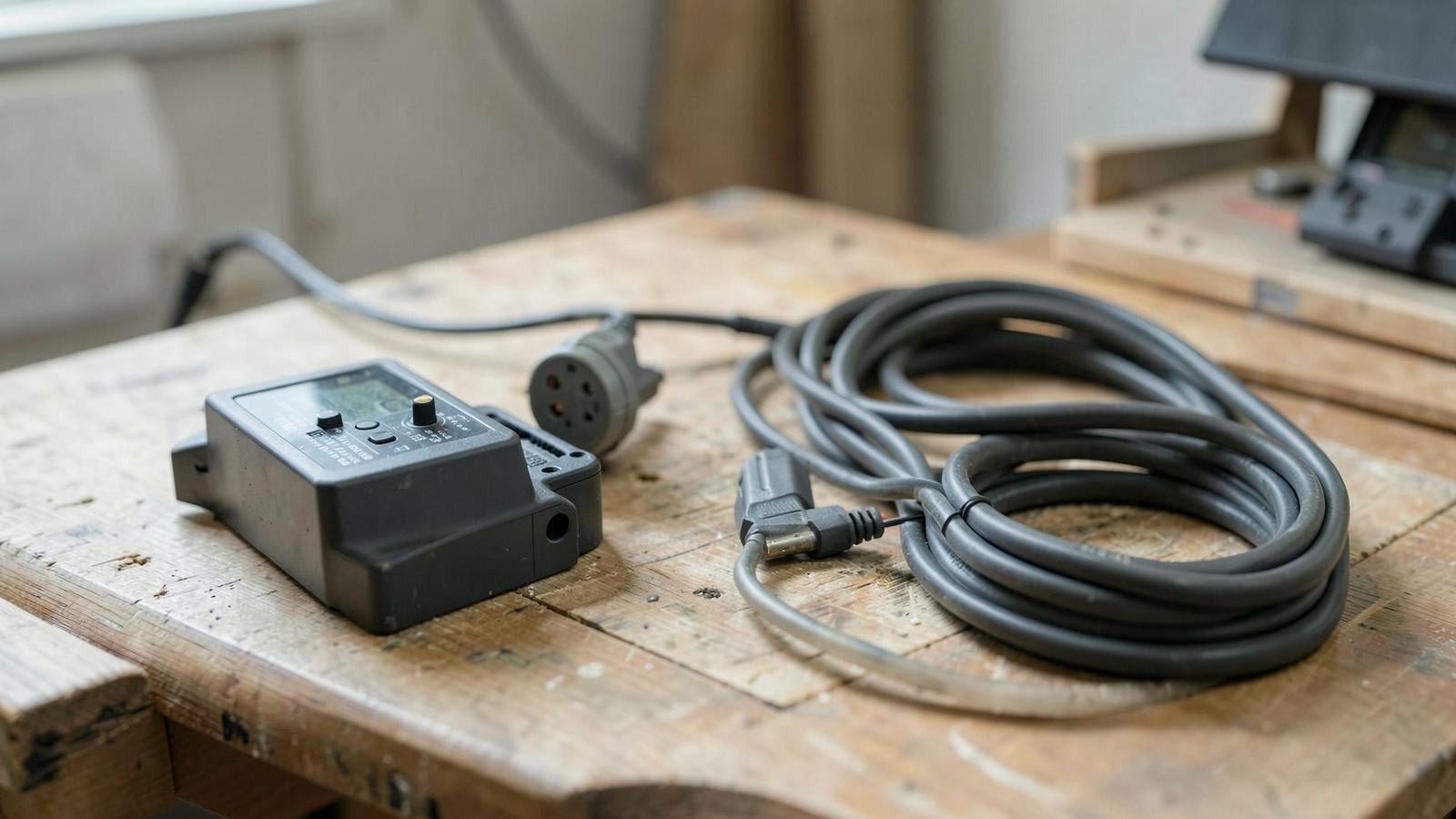
You do not need to become an electrician to understand your energy bill, a battery or a power station. Five ideas — voltage, current, power, energy and AC/DC — explain most of what beginners need.
One of the most common confusions in home electricity is the difference between watts and watt-hours. A watt is a rate of using or delivering energy. A watt-hour is an amount of energy. A 100-watt appliance running for one hour uses about 100 watt-hours. Run it for ten hours and it uses about 1,000 watt-hours, or 1 kilowatt-hour (kWh).
Your electricity bill is based largely on energy in kWh, not the maximum wattage of your appliances. Backup batteries are also rated in watt-hours or kilowatt-hours because capacity is about how much energy is stored.
Voltage: electrical potential difference
Voltage is the electrical potential difference between two points. A useful beginner analogy is pressure in a water system, though electricity is not literally water. Higher voltage can drive current through a given resistance more strongly.
A single lithium battery cell operates at only a few volts. A car electrical system is commonly around 12 V nominal. UK household mains is about 230 V AC. Those systems are not interchangeable simply because they all involve electricity.
Current: the rate of charge flow
Current is measured in amperes, or amps. For a given power level, lower voltage generally requires higher current. That is why a 12 V system supplying a large inverter can require very thick cables: hundreds or thousands of watts at low voltage can mean very high current.
This is also why cable size and fusing matter. Too much current through an undersized conductor can create dangerous heating.
Power: volts × amps
For simple DC calculations, power in watts is approximately voltage multiplied by current: P = V × I. A 12 V device drawing 5 A uses about 60 W. In AC systems, power factor and waveform can make real calculations more complicated, but the basic relationship still provides useful intuition.
Power tells you how demanding an appliance is at a moment in time. A phone charger may draw tens of watts; a kettle can draw thousands. That difference dominates backup-power planning.
DC: batteries live here
Direct current flows with a consistent polarity. Batteries produce DC. Many electronics internally run on DC, which is why chargers convert household AC to low-voltage DC for phones, laptops and routers.
Solar panels also produce DC. In a home solar system, electronics manage that DC, charge batteries if present and use an inverter when AC power is needed.
AC: why the grid uses alternating current
Alternating current periodically reverses direction. AC became dominant for power grids because transformers make it practical to change voltage levels for efficient transmission and local distribution. High voltage allows the same power to be carried with lower current, reducing resistive losses in conductors.
Household appliances are designed for the voltage and frequency of the local grid. In the UK, nominal mains supply is 230 V at 50 Hz.
The inverter: a translator between battery and household appliances
A battery stores DC energy. Many household appliances expect AC. An inverter converts DC from the battery into AC. It has a maximum continuous power rating and often a higher short surge rating for appliances such as motors or compressors.
Inverters are not 100% efficient. Some battery energy becomes heat and operating loss. That is why usable runtime is always lower than a perfect watt-hour calculation suggests.
A simple runtime estimate
Suppose a power station stores 1,000 Wh and you run a 100 W device. The ideal mathematical runtime is 10 hours. Real runtime will be shorter because of inverter loss, battery-management limits and the power station's own consumption.
Now connect a 2,000 W kettle. Even in a perfect system, 1,000 Wh would represent only half an hour at 2,000 W — and many small power stations cannot supply that much power at all. Heating is energy-hungry.
Why fridges are different from kettles
A fridge compressor cycles on and off. Its label or running wattage does not mean it draws that power continuously all day. It may also require a short startup surge. To estimate daily energy, a plug-in energy meter or manufacturer kWh figure is more useful than multiplying running watts by 24 hours.
Kettles, heaters, hair dryers and ovens are simpler in one sense: they are high-power resistive loads. They quickly reveal the difference between "I can run a lamp" and "I can heat a room."
Safety comes before experimentation
Understanding the concepts does not make it safe to open a consumer unit, modify mains wiring or improvise high-current battery connections. Household mains voltage can kill, and batteries can supply enough current to cause fire or severe burns.
Beginner energy experiments should stay on the safe side: read appliance labels, use plug-in meters, compare watt-hours, use certified power stations and seek a qualified electrician for fixed wiring or high-power battery installations.
The Ika's Realm takeaway
Voltage tells you the electrical difference, current tells you how much charge is moving, watts tell you the rate of energy use, and watt-hours tell you how much energy is used over time. AC and DC describe how current behaves. Once those pieces click, batteries and backup power stop looking mysterious.
The next question becomes practical: how much energy do you actually need, and which loads are worth powering when the grid is unavailable?
Key takeaways
- Volts, amps, watts and kilowatt-hours each answer a different question.
- Power is a rate; energy is power used over time.
- DC suits batteries, AC suits the grid, and inverters translate between them.
- Mains electricity work belongs to a qualified electrician.
Enjoyed this?
Get the next one straight to your inbox.
Keep reading
Related articles
Explore more natural food, fermentation and wellness ideas from Ika’s Realm.
The Body Is Electric — The Tiny Voltages That Keep Us Alive
Every nerve impulse, heartbeat and muscle contraction depends on controlled movement of charged particles. Bioelectricity is not metaphorical; it is one of the basic languages of living tissue.

Blue Energy — Can We Harvest Power Where Rivers Meet the Sea?
When fresh water and salt water mix, a concentration difference disappears. That difference contains usable free energy. "Blue energy" technologies try to capture part of it before the waters fully mix.

The Leaf Is a Solar Panel — How Living Systems Capture Light
A leaf and a photovoltaic panel both harvest sunlight, but they solve the problem in radically different ways. One makes electrical current; the other builds chemistry, structure and life.