Beyond the Orange Pumpkin: An Autumn Guide to Squash, Flavour and a Cosier Kitchen
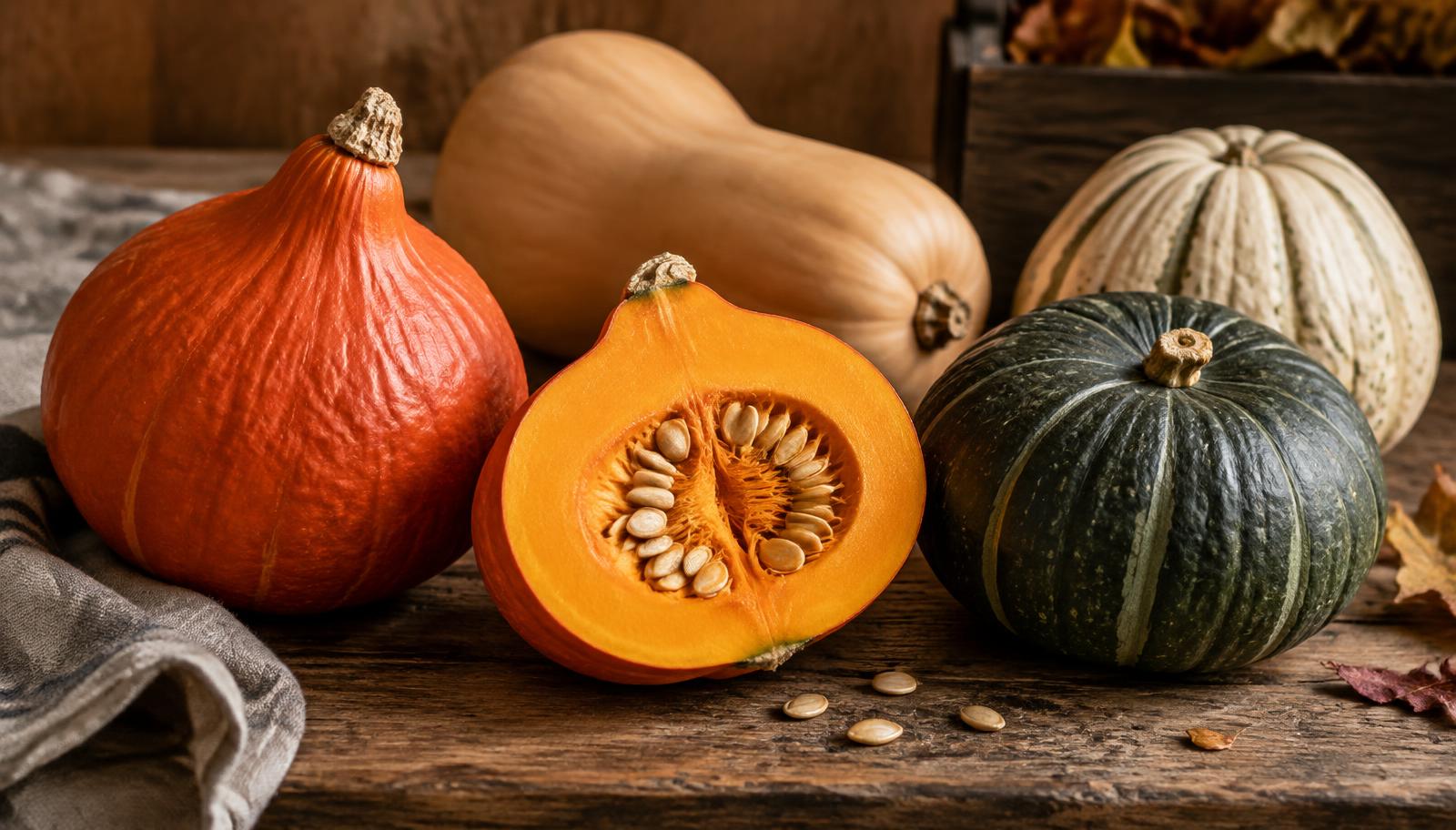
Explore autumn pumpkins and winter squash, their flavours, nutrition and practical uses, with cosy meal ideas and tips to waste less.
There is a particular kind of autumn shopping that begins with choosing something beautiful and ends with wondering how to cook it. A small red squash, a pale butternut, a dark green pumpkin: each looks as though it belongs on a windowsill beside a candle. Yet its most interesting life begins on the chopping board.
Pumpkins and winter squashes offer much more than Halloween decoration or a single pot of soup. Some become silky sauces. Others hold their shape among lentils and herbs. A few make a sweet, dense purée that belongs in breakfast bowls, soft bread or a gently spiced cake. Learning their differences makes autumn cooking easier, more varied and less wasteful.
A family with many names
Pumpkins belong to the genus *Cucurbita*, a group of plants with roots in the Americas. Their history begins with Indigenous cultivation, long before their arrival in European kitchens. Today, familiar autumn squashes include forms of *Cucurbita pepo*, *Cucurbita maxima* and *Cucurbita moschata*. Everyday names do not follow botanical boundaries neatly: “pumpkin” and “squash” overlap, and the same plant may have different market names in different countries. [1, 2]
“Winter squash” describes mature fruits with firmer skins that can be stored; it does not mean the plants need winter weather to grow. Their shapes and colours are wonderfully diverse. The useful question at the market is therefore less “Is this a pumpkin?” and more “What will its flesh do when I cook it?” [3]
Choose by the meal you want to make
| Type | What to expect | A useful place to start |
|---|---|---|
| Butternut | Sweet orange flesh and a long neck that is convenient to cut | Roast in cubes for a grain bowl or blend into a pasta sauce |
| Red kuri / Uchiki Kuri | Small orange-red squash; often described as nutty | Roast in wedges, then serve with white beans and herbs |
| Kabocha | Typically dense flesh and a satisfying texture | Add pieces to a curry or roast for a substantial side |
| Sugar or pie pumpkin | Usually better suited to cooking than a large carving pumpkin | Make a purée for baking or breakfast |
| Spaghetti squash | Cooked flesh separates into strands | Dress with a sauce, then add beans, cheese or another protein |
| Acorn squash | Ribbed fruit with a cavity suited to filling | Roast the halves and fill with cooked grains and mushrooms |
These are starting points, not rigid rules. Variety, maturity and storage all affect texture. The RHS notes the nutty flavour of Uchiki Kuri and distinguishes varieties suited to eating from those grown mainly for carving. A very large pumpkin can be edible yet watery or stringy; size alone tells you little about its usefulness for a cake. [3, 4]
What is inside that orange flesh?
Winter squash can contribute fibre, potassium and carotenoids, including beta-carotene, which the body can convert to vitamin A. The amounts differ between varieties and preparations. Seeds bring a different nutritional profile, including fat and protein. [3]
There is no need to turn a pumpkin into a cure for anything to appreciate it. It is a versatile ingredient that can help make a varied meal. For a filling lunch, combine roasted squash with chickpeas, lentils, eggs, tofu or cheese rather than expecting a bowl of plain purée to do every job.
Let the oven do the first part
A tray of roasted squash is a useful beginning because it leaves several meals open. Keep the seasoning simple for the first batch: oil, salt and black pepper. Add cinnamon to a breakfast portion later, or cumin and chilli to a savoury one.
Wash and dry the squash, set it on a stable board, and use a suitable sharp knife without forcing it through an unstable fruit. Peel if needed, remove the seeds, and cut into pieces of similar size. For a suggested starting method, toss about 800 g of prepared squash with 1–2 tablespoons of olive oil. Spread on a tray and roast at 200°C conventional / 180°C fan until tender with some colour at the edges, usually around 30–40 minutes for medium cubes. Check earlier for small pieces. Texture is a better guide than the clock.
Do not crowd the tray. A deep pile traps moisture; a little space gives the edges a chance to brown. Turn once if necessary. If the pieces are tender but pale, give them more space rather than simply leaving them in until they dry out.
One tray, several autumn meals
A warm lunch bowl: combine squash with cooked lentils, parsley and a spoonful of yoghurt mixed with lemon. Add toasted seeds for contrast.
An easy pasta sauce: blend some squash with a little hot pasta water, olive oil and grated hard cheese or a suitable alternative. Add black pepper and loosen gradually; a thick purée becomes heavy if there is not enough liquid.
A gentle soup: soften onion in a saucepan, add roasted squash and stock, then blend. Ginger gives warmth; a small splash of cream or coconut milk changes the texture. Add beans if you want a more substantial bowl.
A savoury toast: mash squash roughly, spread over toast, and finish with feta, herbs and a few chilli flakes.
A breakfast spoonful: stir plain squash purée into porridge with cinnamon and chopped walnuts. Start with a little and adjust to your preferred texture.
A baking ingredient: use it in a recipe designed for pumpkin purée. Water content varies, so swapping it freely into an unrelated cake recipe can change the result.
Seeds, skins and sensible thrift
Seeds from edible culinary squash can be cleaned and roasted. Their outer shells vary in toughness; they are not always like the green, shell-free pepitas sold in packets. Try a small batch rather than assuming every seed will have the same texture.
Some squash skins soften pleasantly; others remain leathery. Edible does not necessarily mean enjoyable. There is no prize for forcing a tough rind into dinner. Compost suitable scraps where you can, and choose a preparation that suits the fruit.
Buy squash sold for eating. Ornamental gourds should not be treated as food. An unexpectedly bitter squash should not be eaten: cucurbitacins can cause illness. Do not disguise bitterness with sugar or spices. [5]
Keep the next meal in mind
Choose intact fruit without soft patches or mould. Store whole winter squash somewhere cool, dry and ventilated, checking it regularly. Once cut, refrigerate it and follow any packaging instructions.
After cooking, divide leftovers into shallow containers so they cool promptly. UK Food Standards Agency guidance is to refrigerate within one to two hours and eat leftovers within 48 hours or freeze them. Reheat until steaming hot throughout, and only reheat once. [6]
Freezing small portions makes it easier to use what you have: cubes for a lunch, purée for a future recipe, or soup for a day when cooking feels like too much work.
An autumn kitchen does not need to be elaborate. Sometimes it begins with one squash, a warm oven and enough left over to make tomorrow easier.
Further reading
Enjoyed this?
Get the next one straight to your inbox.
Keep reading
Related articles
Explore more natural food, fermentation and wellness ideas from Ika’s Realm.
Stocking an Autumn Pantry the Old Way — A Practical Guide to a Season of Plenty
Build an autumn pantry with roots, apples, grains, dried herbs, ferments, preserves and practical rotation — inspired by old seasonal habits, adapted to a modern home.
Apple Butter — Slow-Cooked Apples Turned Into Caramel-Like Spread
Apple butter is made by cooking apples slowly until concentrated, dark and glossy. Cinnamon, lemon and time do the rest.
Stocking an Autumn Pantry: Small Habits That Make Everyday Cooking Easier
Build a practical autumn pantry around meals you enjoy, with simple organisation, sensible shopping and an introduction to safe preserving.