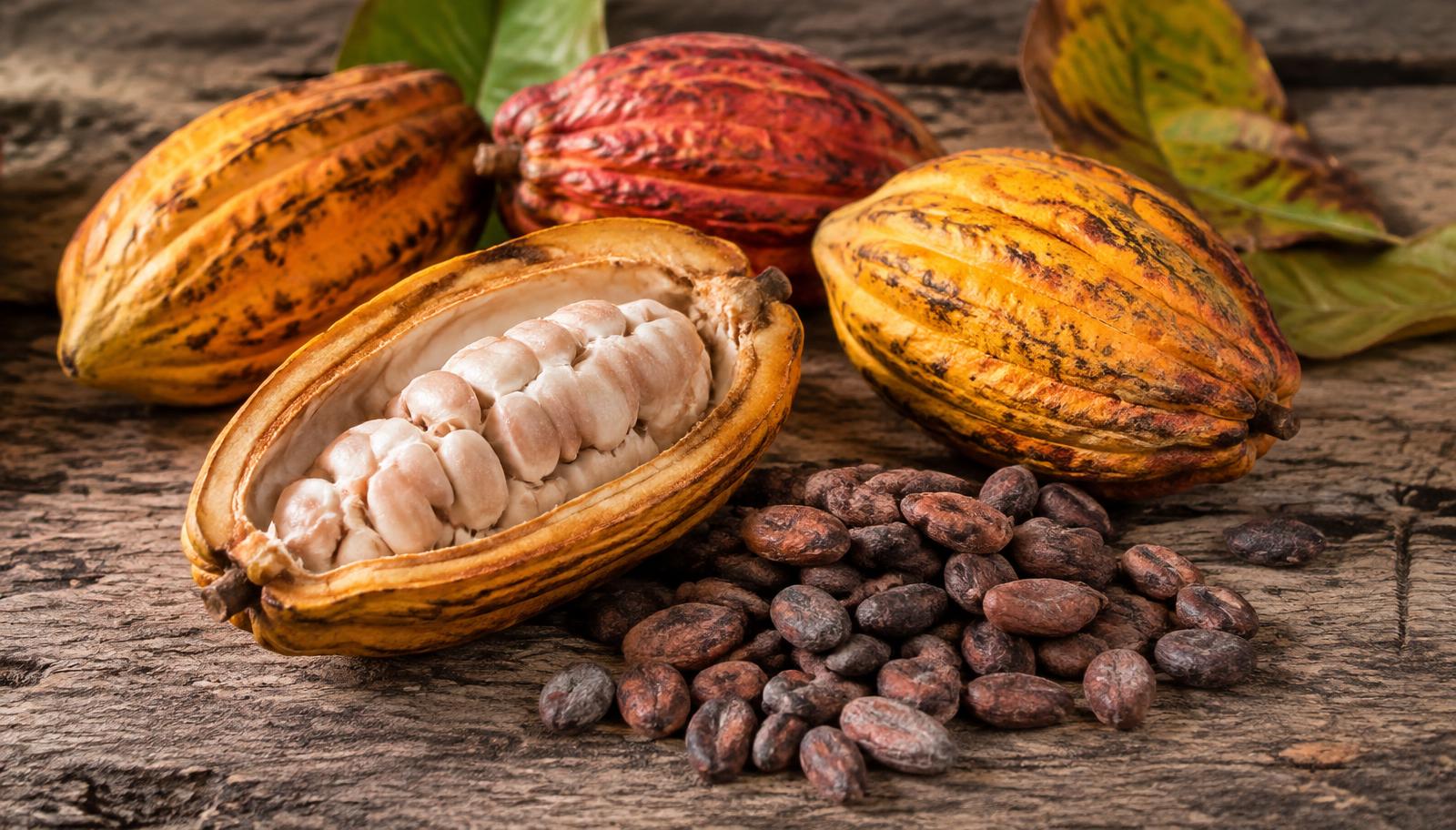
Explore Venezuelan cacao through Chuao, Porcelana and Sur del Lago, with practical tasting tips and questions to ask before buying.
Before you add cinnamon to a cup of cacao, try it plain. There may already be enough to discover: a dry roasted aroma, a suggestion of nuts, a bright edge that softens as the drink cools. These are impressions to explore rather than answers to get right.
Venezuelan cacao offers a useful doorway into this kind of tasting. Its name appears on specialist chocolate bars, bags of beans and drinking cacao. But a country name is only the beginning of a story. To understand the cup, we need to look more closely at place, plant material and the people handling the harvest.
Why origin deserves attention
Venezuela is recognised within the fine-flavour cacao trade. This does not mean that every Venezuelan bean has the same quality or flavour. The International Cocoa Organization describes fine flavour as a result of interacting factors, including genetics, environment, farm management and post-harvest practices. [1]
Think of the origin as an invitation to ask better questions. Which region? Which producer? What happened during fermentation and drying? Is the finished product a blend, a single-country chocolate or a traceable lot from a particular place?
The more precisely a seller can answer, the more informative the origin becomes.
Three names worth understanding
Chuao: a place name
Chuao is a Venezuelan cacao origin, not a synonym for all Venezuelan cacao and not a botanical variety in itself. Makers sell chocolate that specifically identifies beans from Chuao. One example is Alain Ducasse’s Chuao bar, whose ingredient information identifies Venezuelan cocoa beans. The maker’s description is evidence about that product, not a promise that every Chuao chocolate will taste identical. [2]
For the home buyer, the useful habit is to read beyond the large place name. Look for a clear account of sourcing and processing, and distinguish the origin of the beans from the country where the chocolate was made.
Porcelana: a name associated with Criollo cacao
Porcelana appears in specialist discussions and products associated with Criollo cacao. Both Domori and Valrhona discuss work involving this Venezuelan cacao heritage. Their accounts provide examples of producer and maker involvement; they should not be taken as neutral proof of every promotional claim about rarity or flavour. [3, 4]
A label saying “Porcelana” is a starting point for questions about the particular lot. Avoid assuming that it guarantees a certain percentage of cacao, a standard drink recipe or a universally superior taste.
Sur del Lago: regional information
Valrhona identifies the Sur del Lago region, including Las Virtudes and Tucani, in its description of Araguani pure cacao paste. This shows the value of regional detail: “Venezuela” can be made more specific. It also provides one concrete example of a maker describing woody and sweet-spice characteristics. Those notes belong to its product description rather than to every cacao grown in the region. [5]
The farmer’s work is part of the flavour
Origin stories can become so romantic that the work disappears. Cacao needs careful harvesting and handling. Fermentation, drying and later processing help determine the final result. Poorly handled beans do not become excellent simply because they come from a celebrated place. [6]
Sensory evaluation gives producers and makers a way to discuss quality more consistently. Cacao of Excellence publishes protocols for preparing and evaluating cacao and chocolate. At home, you do not need laboratory equipment, but you can borrow one useful principle: compare under similar conditions. [7]
Use the same amount of cacao, the same liquid and similar temperatures. Change one thing at a time. Otherwise, a richer drink may simply contain more cacao, and an apparently sweeter bar may simply contain more sugar.
A small tasting at the kitchen table
Choose two clearly labelled products. If tasting chocolate, compare similar cacao percentages and check added ingredients. If tasting cacao mass, prepare the two cups with equal weights and equal liquid. Begin without milk or spices if those would make differences harder for you to notice.
Smell before tasting. Take a small sip or piece and give it time. Record your own words rather than searching immediately for the maker’s tasting notes.
| What to notice | A question to ask |
|---|---|
| Aroma | Does it remind me of toast, nuts, fruit, wood or something else? |
| Acidity | Is there a bright, tangy impression? Is it pleasant to me? |
| Bitterness | Is it gentle, prominent or lingering? |
| Astringency | Does my mouth feel dry or puckered? |
| Texture | Is it smooth, gritty, thin or coating? |
| Finish | What remains after I swallow, and does it change? |
These are observation prompts, not a scientific grading sheet. You do not need to find red berries because the packet says red berries. Your own preference matters, and it may change with the way you prepare the drink.
Ceremonial and Venezuelan describe different things
“Venezuelan” describes an origin claim. “Ceremonial” describes how a product is presented or intended to be used. A Venezuelan cacao paste may be sold for drinking, chocolate making or ceremonial use. The words do not tell you the same information.
For a simple warm cup, choose food-grade unsweetened cacao mass and follow its instructions. Begin with a modest quantity, whisk it into warm liquid, and taste before adding anything. Use the same caution about caffeine and theobromine that you would with cacao from another country. A distinctive origin does not remove those compounds. [8]
Buying with curiosity rather than collecting labels
Before paying more for an origin name, look for:
• a complete ingredient list and a clear description of the product;
• origin information more specific than decorative imagery;
• named producers or sourcing partners where available;
• an explanation of processing, rather than vague claims of purity;
• evidence behind ethical or certification claims;
• preparation guidance and storage instructions.
A higher retail price does not by itself tell you how much a grower received. Likewise, “direct trade” is more useful when a company explains the actual relationship. Ask for concrete information rather than assuming a reassuring phrase has answered every question.
Give a good ingredient room
If you buy a small amount of interesting cacao, prepare it simply at least once. Then experiment: a little milk for softness, a tiny pinch of cinnamon for warmth, or a different ratio of water to cacao.
You can also taste it beside an ordinary cacao product you already enjoy. The purpose is not to make the familiar one seem inadequate. Comparison helps you understand what you like and whether the difference is worth the price to you.
Venezuelan cacao is most rewarding when it leads beyond a prestigious label. A more precise place, a named producer, a carefully handled harvest and a few attentive sips can turn a familiar flavour into something worth exploring slowly.
Further reading
- International Cocoa Organization — Fine Flavour Cocoa
- Le Chocolat Alain Ducasse — Chuao 75%
- Domori — Criollo Porcelana 70%
- Valrhona — Araguani 72%
- Valrhona — Pure Paste
- International Cocoa Organization — Processing Cocoa
- Cacao of Excellence — Quality Evaluation & Protocols
- International Cocoa Organization — Health & Nutrition
Enjoyed this?
Get the next one straight to your inbox.
Keep reading
Related articles
Explore more natural food, fermentation and wellness ideas from Ika’s Realm.
Ceremonial Cacao: The Plant, the Traditions and a Thoughtful Cup at Home
Understand ceremonial cacao, its history, common label terms and preparation, with a thoughtful guide to making a simple cup at home.
Three Warming Drinks for a Cold Evening
Golden ginger milk, cocoa maca and a ginger lemon infusion. Three simple winter rituals that need no health claims to be worth making.
Lion's Mane Hot Chocolate: A Cosy Functional Drink
A warming cocoa with lion's mane powder, cinnamon and very little sweetness. What the research is actually looking at, and how to make it taste good.