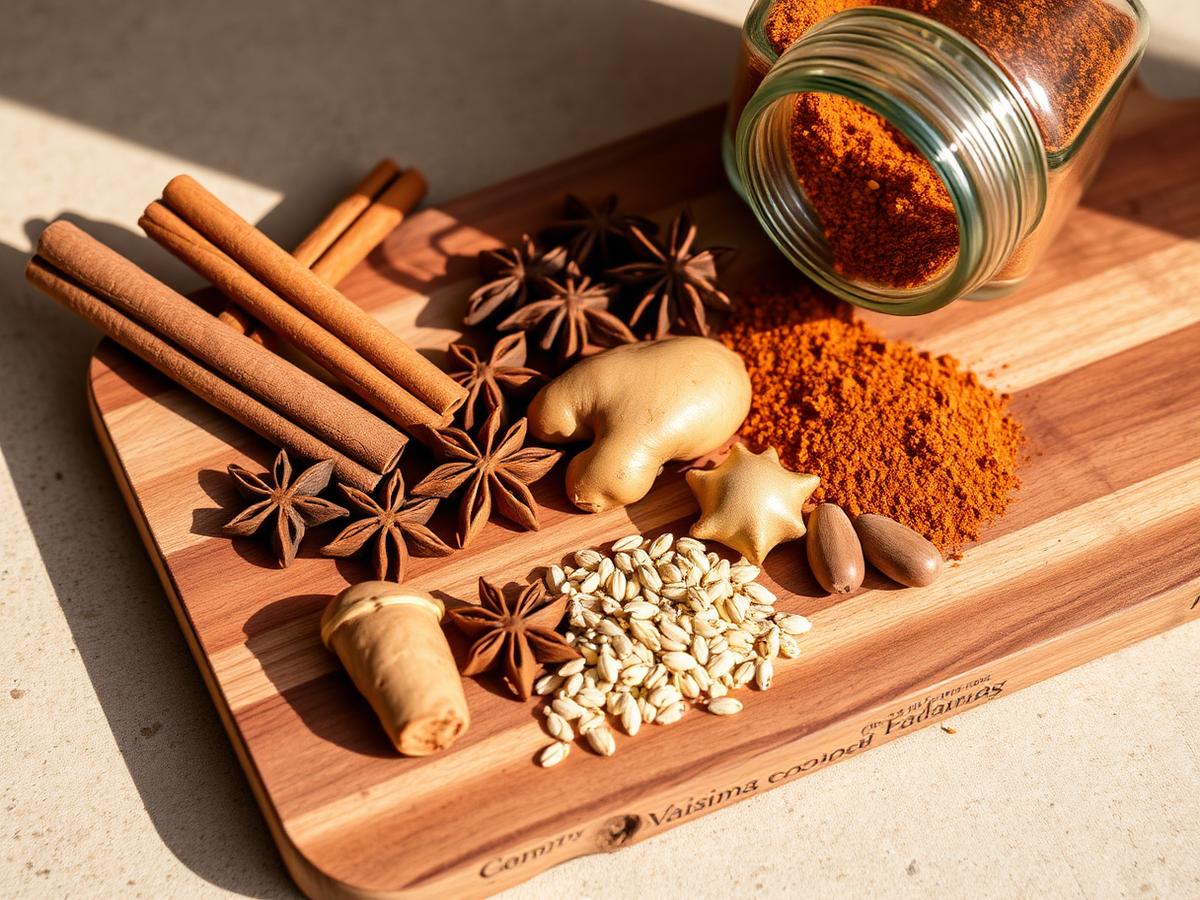
Cinnamon, ginger, cloves, nutmeg and cardamom deserve more than one month a year. A blend to mix, and a dozen everyday ways to use it.
Gingerbread spice gets shut in a cupboard for eleven months of the year, which is a waste of one of the most useful blends in the kitchen.
It costs almost nothing to mix, it adds a sense of sweetness without sugar, and it transforms ordinary porridge, coffee and roasted vegetables into something that tastes considered.
What goes into the blend
The traditional core is cinnamon, ginger, cloves and nutmeg, with cardamom appearing in many northern European versions. Allspice, star anise, black pepper and coriander seed turn up in regional variations.
Cinnamon is the backbone: warm, sweet and woody, and used in the largest quantity. Ginger provides brightness and heat, sharpening everything around it and stopping the blend from becoming cloying.
Cloves are extraordinarily aromatic, largely due to eugenol, which is why a single teaspoon can dominate an entire batch. Nutmeg is sweet and resinous and needs the same restraint.
Cardamom is the ingredient people leave out and then miss. Fresh, floral and faintly citrus, it lifts the whole mixture away from heaviness.
Mixing a good batch
A reliable ratio is four parts cinnamon, two parts ginger, one part cloves, one part cardamom and half a part nutmeg. Whisk them together until the colour is completely even.
Grinding whole spices yourself makes a noticeable difference, particularly with cardamom and nutmeg, whose volatile aromatics fade quickly once ground. A cheap coffee grinder kept for spices is worth the cupboard space.
Mix small quantities. Ground spice loses aroma steadily, so four tablespoons that you finish in three months will always beat a large jar that lingers for two years.
A dozen everyday uses
Stir it into porridge, overnight oats, yoghurt or a compote. Whisk it into coffee, cocoa or warm milk. Dust it over baked apples, roasted squash, carrots or parsnips.
It works in pancake batter, banana bread, rice pudding, poached pears, smoothies and even in a savoury lentil or squash soup where a small pinch adds warmth and depth.
The most useful trick is psychological: spice increases the perception of sweetness. Many people find they can reduce added sugar noticeably in a recipe once the spice is generous.
Nutritional and traditional context
These spices travelled the medieval trade routes and were, for centuries, extraordinarily valuable. Gingerbread itself has a documented history in monastic and guild baking across Europe.
Nutritionally, spices are used in such small quantities that their contribution of vitamins and minerals is negligible. Their interest lies in their aromatic and polyphenolic compounds, which food scientists continue to study.
Cinnamon, ginger and clove all show antioxidant activity in laboratory settings. That is a long way from a demonstrated health benefit at the quantities used in a bowl of porridge, and we would not present it as one.
Limitations and safety notes
Spices are flavour, not medicine. Nothing in this blend treats, prevents or cures anything, and claims about blood sugar or metabolism made for cinnamon supplements are far stronger than the evidence supports.
Cassia cinnamon contains coumarin, and very high habitual intake has been linked to liver effects in susceptible individuals. Culinary use is fine; daily high-dose supplementation is not something to do casually.
Concentrated ginger or clove preparations may interact with anticoagulant, antiplatelet or glucose-lowering medication. Culinary amounts are a different matter, but check with your clinician if you take these medicines.
During pregnancy, culinary use of these spices is generally regarded as fine, while concentrated supplements are best avoided unless a clinician advises otherwise.
Key takeaway
Mix a small jar, keep it beside the porridge rather than with the Christmas baking, and use it all year. It is one of the cheapest ways to make everyday food taste like it was made on purpose.
Recipe card
Recipe: Gingerbread Spice Blend
Ingredients
- 4 tsp ground cinnamon
- 2 tsp ground ginger
- 1 tsp ground cloves
- 1 tsp ground cardamom
- 1/2 tsp ground nutmeg
Method
- 1Combine everything in a small bowl and whisk until evenly coloured.
- 2Transfer to an airtight jar and label it with the date.
Storage
Keep airtight, away from heat and light, and use within about six months for the best aroma.
Serving ideas
- Stirred into porridge or yoghurt
- Whisked into coffee or cocoa
- Baked apples and roasted squash
- Smoothies and compotes
Key takeaways
- Cinnamon carries the blend; cloves and nutmeg need restraint.
- Spice adds perceived sweetness without added sugar.
- Mix small batches and store airtight for aroma.
- Culinary amounts are fine; high-dose cinnamon supplements are not.
Enjoyed this?
Get the next one straight to your inbox.
Keep reading
Related articles
Explore more natural food, fermentation and wellness ideas from Ika’s Realm.

Three Warming Drinks for a Cold Evening
Golden ginger milk, cocoa maca and a ginger lemon infusion. Three simple winter rituals that need no health claims to be worth making.
Lion's Mane Hot Chocolate: A Cosy Functional Drink
A warming cocoa with lion's mane powder, cinnamon and very little sweetness. What the research is actually looking at, and how to make it taste good.
Extra Virgin, Virgin and Refined Olive Oil: What the Labels Actually Mean
Olive oil labels confuse almost everybody. Here is what each grade means, how they are produced, and what actually matters when you buy a bottle.